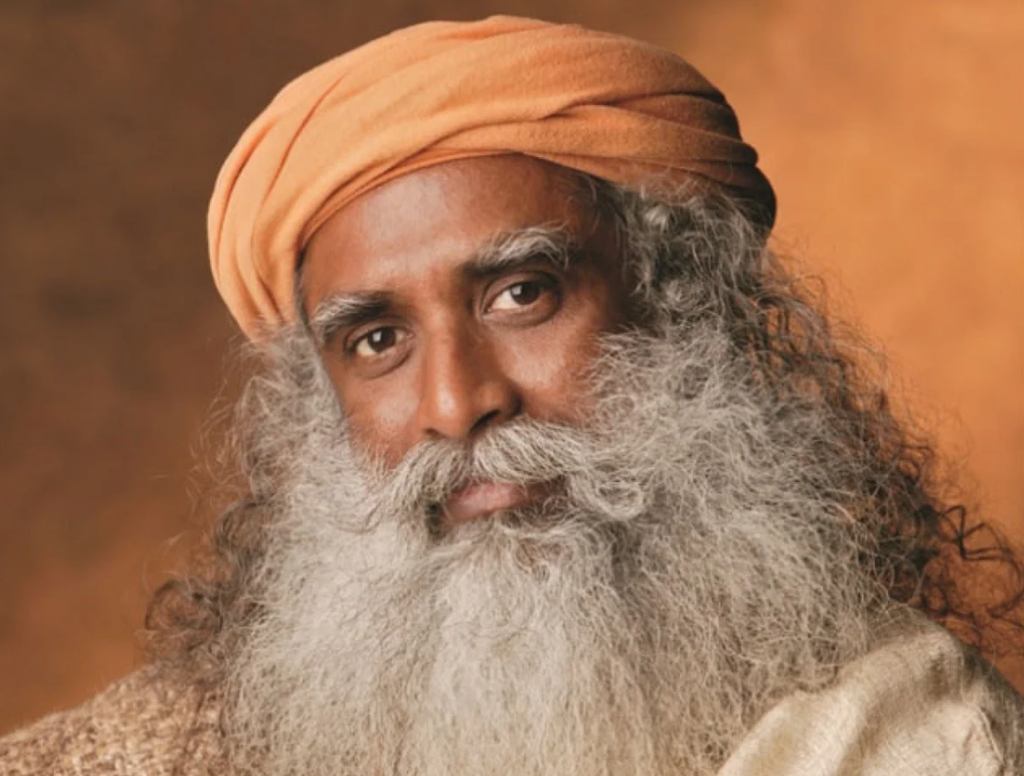

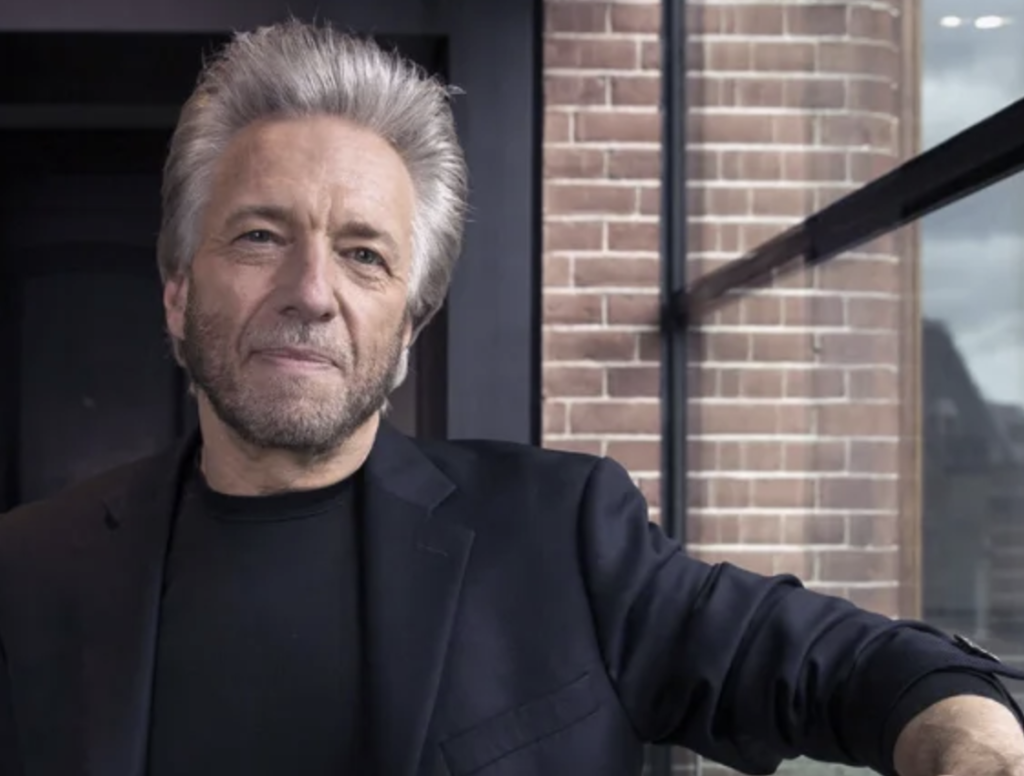
Who is Gregg Braden? ☮️
Templeton Prize nominee and multi New York Times best-selling author Gregg Braden is well known internationally as a pioneer in bridging science, ancient knowledge, religion, and spirituality. He researches a range of topics, including both modern day science, ancient beliefs, and human potential.
From 1979 to 1991 Gregg worked as a problem solver during times of crisis for Fortune 500 companies, including Cisco Systems, where he became the first Technical Operations Manager in 1991. He continues problem solving today as his work reveals deep insights into the new human story, and how the discoveries inform the policies of everyday life and the emerging world. To date his research has led to 15 film credits and 12 award-winning books now published in over 40 languages.
Gregg Braden Quotes 🗣️
Here are some of his most famous quotes:
“To create reality, focus beyond the outcome, as if it has already happened.”
“The object of our attention becomes the reality of our world.”
“We’re creators and even more than that, we’re connected creators.”
“Similar to observers in the Copenhagen interpretation, we only see the possibility we focus on and that’s the key to locking that particular possibility into place as a reality.”
“We are part of a much greater system of many realities, within realities, within other realities.”
“Let yourself be silently drawn by the stronger pull of what you really love.”
“We have all the power we need to create all the changes we choose!”
Gregg Braden’s Books and Videos 📚
Gregg Braden’s books include highly acclaimed Fractal Time, The Wisdom Codes: Ancient Words to Rewire Our Brains and Heal Our Hearts, The Divine Matrix: Bridging Time, Space, Miracles, and Belief, and Secrets of the Lost Mode of Prayer: The Hidden Power of Beauty, Blessing, Wisdom, and Hurt. Check out the videos below of his work.
Video 1 – The Ether Scientific Evidence of the Divine Matrix
In this talk, Gregg Braden, presents the idea of a universal “Divine Matrix”; a fundamental field of energy that he claims connects everything in the universe, bridging science, spirituality, and consciousness.
He begins by describing an older scientific concept called the “ether” (or Aether), which many 19th- and early 20th-century scientists believed filled empty space. He cites figures such as Isaac Newton, James Clerk Maxwell, Hendrik Lorentz, and Albert Einstein, arguing that they either supported or entertained the idea of a pervasive medium underlying reality. He also links inventors and thinkers like Nikola Tesla, Rudolf Steiner, Royal Rife, and others to technologies he says relied on this field.
A key scientific reference is the Michelson-Morley experiment (1887), which attempted to detect the ether, but found no evidence for it. Braden interprets this as a misreading that led mainstream science to reject the ether and adopt a model of physical separation between objects.
Experiments (including a 1986 repetition he attributes to a researcher named Silvertooth) suggested evidence of a detectable field again, implying a revival of the ether concept.
Braden then discusses modern particle physics and the work of CERN. He describes CERN’s particle accelerators and the discovery of the Higgs boson, associated with physicist Prof. Peter Higgs. He interprets the Higgs field as a modern scientific version of the ether; a universal field that gives particles mass and permeates all space.
From this, he argues that physics is converging back toward the idea of a fundamental unifying field (which he calls the “matrix” or “divine matrix”). He describes this field as having three main roles:
- It is the container of all reality (everything exists within it).
- It is the bridge between thoughts and physical reality.
- It is a kind of “mirror” reflecting beliefs and intentions (linking to the Law of Attraction).
He connects this interpretation to ancient spiritual traditions and symbols (including a reference to Hindu imagery of transformation), suggesting that modern physics and ancient wisdom are converging on the same truth.
The talk concludes with a personal anecdote from a Tibetan monastery, where he asks what the “stuff” of the universe is. The answer he receives is a single word; “compassion”.
In summary, modern physics (especially the Higgs field and CERN research) supports an ancient idea of a universal connecting field, which the speaker interprets spiritually as a “Divine Matrix” that links matter, consciousness, and meaning.
Video 2 – Hidden Teachings of the Bible That Explain Manifestation, Consciousness & Oneness
In this lecture, Gregg Braden, argues that early Christian texts, especially the Gospel of Thomas contain hidden teachings about consciousness, manifestation, and human spiritual power that were later removed from the Bible.
He begins with the claim that in 1945, discoveries linked to the Nag Hammadi library revealed ancient “Gnostic” manuscripts. These texts, including the Gospel of Thomas, are presented as collections of sayings attributed to Jesus that emphasize direct spiritual knowledge (“gnosis”) rather than faith in external authority.
Braden highlights that the Gospel of Thomas contains sayings suggesting:
- The “kingdom of God” is within and around each person.
- Humans are capable of self-realization and spiritual awakening.
- Understanding oneself leads to transformation and “reign over the universe”.
He argues that these teachings were excluded from the canonical Bible, especially after the early Church councils under Emperor Constantine the Great in 325 AD, which allegedly edited or removed many texts. He claims this suppression removed teachings about inner power, unity, and consciousness.
The transcript connects this to broader ideas of oneness and manifestation, claiming that:
- Reality is shaped by consciousness (as shown in The Double Slit Experiment).
- Thoughts and emotions must be unified to influence the world.
- “Feeling as if” a desired outcome has already happened is the key mechanism for manifestation (the Law of Assumption).
He interprets selected sayings from the Gospel of Thomas as instructions for this process, especially those suggesting:
- The kingdom is inside you.
- Splitting perception between inner and outer reality is an illusion.
- Unity of thought and emotion allows transformation of reality.
Braden also connects these ideas to modern spiritual practices and the Law of Attraction, with parallels between ancient texts, Buddhist teachings, and modern metaphysical ideas.
He gives examples such as:
- Praying or manifesting by feeling the outcome as already real.
- Martial arts visualization techniques (imagining success before action).
- Healing practices that rely on belief, emotion, and intention rather than physical intervention.
He concludes that humanity has always had access to this inner power, but it was obscured by edited religious teachings. According to his interpretation, the true message of Jesus (as preserved in these texts) is that humans are not separate from divine consciousness, but expressions of a single universal awareness.
In summary, early Christian “hidden” texts reveal a teaching that reality is shaped from within by consciousness, and that this knowledge was removed from mainstream religion, but survives in Gnostic writings like the Gospel of Thomas.

Video 3 – Cycles of Time with Gregg Braden
In this video from Gaia, Gregg Braden introduces a series called “Missing Links: The Deep Truth of Our Origin, History, Destiny, and Fate”, arguing that modern scientific discoveries reveal hidden patterns in Earth’s history and human society that mainstream education and media often overlook.
He discusses that Earth and human life operate in cycles. The current global instability is due to the simultaneous convergence of three major natural cycles:
- Climate cycles
- Economic cycles
- Cycles of human conflict
These cycles are predictable, repeatable, and currently overlapping, creating a period of global “extremes”.
1. Climate cycles and ice core data
He focuses heavily on evidence from ice cores, tree rings, and ocean sediments, especially data from Antarctica (including the Vostok and EPICA ice cores):
- Earth’s climate naturally fluctuates in long cycles (e.g. ~100,000-year, 41,000-year, and 26,000-year cycles).
- Current warming is not unprecedented, pointing to past periods like the Medieval Warm Period (820-1040 CE and 1200-1300 CE), when temperatures were allegedly higher than today.
- He argues that climate change is part of a long natural rhythm rather than solely a modern anomaly.
He also challenges mainstream interpretations of carbon dioxide:
- He claims ice core data shows temperature changes occur before changes in CO₂ levels.
- He interprets this as evidence that CO₂ is not the primary driver of climate change.
- He suggests that higher CO₂ in the past may have even correlated with cooling periods.
2. Astronomical (Milankovitch) cycles
He introduces the work of Milutin Milankovitch, describing Earth’s orbital variations:
- Precession (~26,000 years).
- Obliquity (tilt).
- Eccentricity (~41,000–100,000 years).
When these cycles align, they influence warming and cooling patterns on Earth. He presents this as evidence that climate shifts are driven by predictable astronomical mechanics rather than human activity alone.
3. Economic cycles
He cites economist Nikolai Kondratiev and proposes a 66-year economic cycle, divided into “seasons”:
- Spring (growth/inflation).
- Summer (high inflation/volatility).
- Autumn (stability/transition).
- Winter (deflation/depression).
The world entered a new inflation phase around 2015. Economic instability and market swings are part of this repeating cycle, not random crises.
4. Cycles of human conflict
War and social unrest also follow cyclical patterns influenced by external conditions, including solar activity.
- Solar cycles to periods of innovation and conflict (things like solar flares also impact people’s behaviors affecting stock market prices).
- Historical wars and revolutions to peaks in solar activity.
We are currently in a period of increased vulnerability to conflict (peaking around 2020 in his model), but emphasizes this is not deterministic, rather, it reflects conditions that increase tension and the need for cooperation.
5. Overall conclusion
Braden’s overarching message is that:
- Earth systems, economies, and human behavior are interconnected through large natural cycles.
- We are currently living in a rare moment where multiple cycles align, creating rapid change and instability.
- Understanding these cycles allows humans to become more resilient and make better decisions during periods of “extremes.”
In summary, climate change, economic instability, and global conflict are not isolated events, but part of predictable long-term cycles driven by Earth’s natural systems and cosmic influences, and that recognizing these patterns can help humanity navigate a period of intense global change.

Video 4 – How to Stop Negative Thoughts and Feelings?
In this video, Gregg Braden, explores the idea that human emotions, especially so-called “negative” ones, are not inherently harmful, but become problematic based on how we judge and interpret them.
1. Emotions are neutral until judged
- Feelings (anger, fear, jealousy, sadness) are not “good” or “bad” on their own.
- They only gain a positive or negative meaning when we attach judgment to them.
- Without judgment, they are simply signals or experiences.
- Emotional healing comes from:
- Allowing feelings to arise without suppression.
- Observing them consciously (“I am feeling this”).
- Asking what they are trying to show us.
- Avoiding repression, which leads to long-term emotional “burden”.
- Unresolved emotions build up over time and later express themselves as psychological or physical problems.
2. Ancient teachings (mind, emotion, and feeling must align)
- He references the Essenes, an ancient spiritual tradition.
- The Essenes taught that humans exist in three interconnected realms; thought, feeling, and emotion.
- When these three are unified, humans can create powerful changes in reality (what he describes as “moving mountains”).
3. Compassion and perception
- He recounts a dialogue with a Tibetan Buddhist abbot who describes the force holding the universe together as compassion:
- Compassion is not just emotion, but also a universal force.
- Living with compassion means being fully present and aware of interconnectedness.
- He connects this to modern physics concepts, suggesting reality is an interconnected energetic field.
4. Resonance and energy alignment
- Humans, like musical instruments, can be “tuned” through thoughts and emotions.
- When people share aligned emotional states, they influence each other and their environment.
- A small number of focused individuals can have a large effect on chaotic systems (linking to the Hundredth Monkey effect).
5. Science, energy fields, and consciousness
- The universe is described as an energetic field of connection.
- He associates this with ideas linked to physicist Max Planck, who is interpreted as suggesting a foundational “matrix” of energy.
- He also references modern science imagery such as the Chandra X-ray Observatory, claiming it reveals structures of energy in space that resemble interconnected webs.
6. Healing through belief and emotion
- Focused emotional states (especially compassion or belief in healing) can influence physical health.
- He presents anecdotes of rapid healing, including:
- A documented medical case in China where repeated words chanted by nurses affected feeling and frequency, curing the patient’s cancer.
- His own personal experience of recovery after a diagnosis.
- Mind, emotion, and belief can affect the body at a biological level.
7. Prayer as a continuous state of being
- Prayer is not an occasional practice.
- It is a continuous emotional state (“living prayer”).
- The effectiveness of intention comes from sustained feeling, not isolated rituals.
- He describes “feeling-based prayer” as something that can be maintained throughout daily life.
8. Science and spirituality should be unified
- He criticizes the separation between science (how things work) and spirituality (how to live meaningfully).
- He argues that:
- Ancient traditions already knew of interconnectedness.
- Modern science is only recently approaching similar ideas.
- The future requires combining both perspectives.
- He also frames this integration as a new emerging worldview that blends logic, physics, and spiritual wisdom.
9. Overall message
- Thoughts, emotions, and beliefs form a powerful system that shapes perception and physical reality (linking to the Law of Correspondence in the Hermetic Principles of the Universe; “As within, so without”, the Law of Assumption, and Dr. Masaru Emoto’s experiments on how consciousness/thought change particle formations).
- Emotional judgment is what turns neutral experiences into suffering.
- Compassion, awareness, and emotional alignment can create healing and harmony.
- Reality is interconnected, and humans influence it through their internal state.
In summary, emotions are neutral signals rather than problems, and that by aligning thought, feeling, and emotion (especially through compassion) humans can transform their health, relationships, and even external reality, supported by a blend of ancient teachings and interpretations of modern science.

Video 5 – You Emotion Matters (Gregg Braden)
In this interview, Gregg Braden touches on how human emotions are a powerful force that can directly influence both the body and the external world.
- Human emotions are a “language” that affects biological processes, including DNA and cellular function.
- This influence may extend beyond the body into the surrounding physical world through what he describes as a unified energy or “field” (framed in connection with quantum physics ideas such as the Michelson-Morley experiment and the Higgs boson discovery).
- Science is beginning to reconnect with ancient wisdom that has always viewed humans as interconnected with each other and the universe.
He emphasizes that:
- Humans are not separate or powerless, but part of a larger interconnected system.
- Emotions like anger, fear, and frustration act as signals and must be recognized and resolved rather than suppressed.
- Positive emotional states like peace, compassion, forgiveness, and love are said to “shape” outcomes in health and life experiences.
He also contrasts two worldviews:
- A competitive, separation-based worldview (which he criticizes as dominant in modern culture).
- A cooperative, interconnected worldview found in nature and many indigenous or ancient traditions.
Key practices he promotes include:
- Emotional awareness and self-responsibility.
- Forgiveness and “blessing” difficult experiences.
- Cultivating feelings as if desired outcomes (healing, peace) are already present.
Overall, the message is that human emotional states are central to healing, personal power, and even influencing reality, and that aligning emotions with compassion and cooperation leads to a better world.

The basis of the Law of Attraction is primarily focusing on getting your vibe/vibration right (as Neville Goddard and Dr. Bob Proctor taught; the Law of Vibration is the primary to manifesting and a Hermetic Principle of the Universe). Then, circumstances and actions to take will appear/become more clear/be attracted to you. In turn, external reality aligns with the internal thoughts and feelings that emit frequencies/vibrations. When people raise their vibration on an individual level, it positively affects everything/everyone around them. When multiple people do, it affects reality as a whole (again, as humans are “godly” creators) and it only takes a few to change the whole (as shared by Gregg Braden, linking to the Hundredth Monkey effect).
You can read more about Gregg Braden via his category here and on Gregg Braden’s website here.