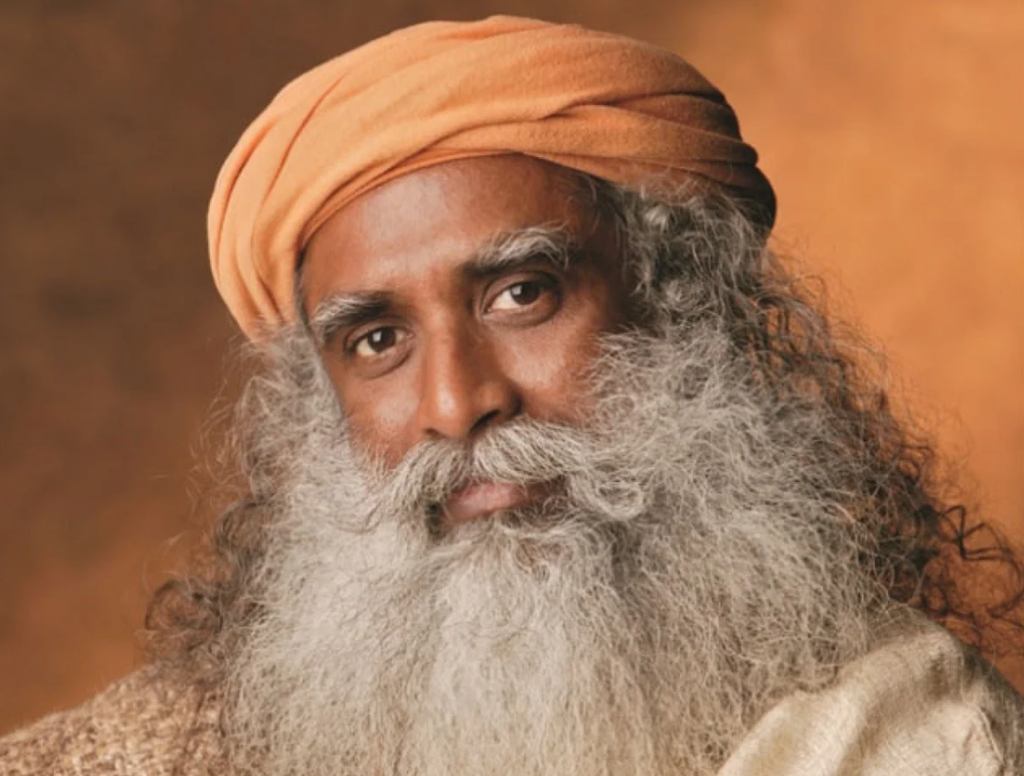


Who is John Assaraf? 🧠
John Assaraf is a renowned success guru whose exposure grew after his role in the film The Secret. Referred to as “The Brain Whisperer”, he is one of the leading high performance, success coaches in the world. He is a behavioral neuroscience researcher who has appeared multiple times on popular shows such as Larry King Live and Anderson Cooper, sharing his practical, goal-getting mind hacks.
As CEO and co-founder, he grew Re/Max of Indiana from start-up to 85 offices and 1200 sales associates who sold over $4 Billion a year. He was also one of the founders of Bamboo/IPIX that went public on NASDAQ with a market cap of $2.5 Billion.
He has written 4 books including 2 New York Times best sellers and is the creator of the “innercise” movement. He has been featured in 11 movies, including as mentioned the blockbuster hit The Secret, as well as Quest For Success with Richard Branson and the Dalai Lama. CEO of MyNeuroGym, a neuroscience based company, he has dedicated himself to helping individuals strengthen their mindset, so they achieve their goals and dreams, wiring their minds for success.
John Assaraf Quotes 🗣️
He has a number of quotes including:
“Ability is what you are capable of doing. Motivation determines what you do. Attitude determines how well you do it.”
“If you are interested you’ll do what’s convenient. If you’re committed, you’ll do whatever it takes.”
“The strongest factor for success is self esteem: Believing you can do it, believing you deserve it, believing you will get it.”
“Plant your seeds. Water them. Do your part as best as you can. The universe will do its part perfectly every time, no exceptions.”
“Most people are thinking about what they don’t want, and they’re wondering why it shows up over and over again (this is the Law of Attraction in effect, focus on what you want!).”
“If you want more money in your life, give some away. If you want more love, give some to someone else. Whatever you want more of, give more of.”
“The secret to having it all is believing you already do.”
John Assaraf’s Books and Videos 📚
He has written 4 books including 2 New York Times best sellers that have been translated to 35 languages. These books include Innercise: The New Science to Unlock Your Brain’s Hidden Power, The Answer: Your Guide to Achieving Financial Freedom and Living an Extraordinary Life, Having it All: Achieving Your Life’s Goals and Dreams, and The Vision Board Book: How to Use the Power of Intention and Visualization to Manifest the Life of Your Dreams.
You can check out the YouTube videos below for an insight into some of his best teachings and his portfolio of books here.
Video 1 – How to Train Your Brain to Achieve Success
In this video, John Assaraf explains success through the lens of neuroscience and how the brain filters reality based on learned patterns. Using a visual exercise with the FedEx logo (where most people initially miss hidden elements like an arrow and a “measuring spoon”), he demonstrates a core idea; the brain doesn’t see everything, it recognizes what it has been trained to recognize. In other words, perception is pattern-based, and untrained patterns lead the brain to “delete or distort” information that doesn’t fit existing beliefs.
From there, he connects this idea to goal achievement. He argues that most people fail not because they don’t know what to do, but because their internal brain patterns override their conscious intentions. He distinguishes between goal setting and goal achievement, emphasizing that behavior alone isn’t enough if subconscious beliefs are in conflict with conscious goals.
A central theme is the interaction between different brain “states”. He describes a motivational system (associated with dopamine and forward-driven thinking, linked to the left prefrontal cortex) versus a fear/stress system (linked to doubt, avoidance, and procrastination, associated with the right prefrontal cortex). When fear-based patterns dominate, motivation drops and people delay action.
He stresses the importance of three foundational elements:
- A clear vision of what you want.
- Specific goals that support that vision.
- A strong emotional “why” that creates urgency and meaning.
Without a compelling “why”, he argues, the brain defaults to comfort, fear, and existing habits.
A major obstacle he highlights is cognitive dissonance between conscious goals and subconscious beliefs (e.g. “I want success” vs “I’m not good enough”). This internal conflict creates mental resistance, procrastination, and self-sabotage.
To fix this, he introduces a daily practice called cognitive priming, which includes:
- Controlled breathing to reduce stress and create calm (he calls this “take six” breathing).
- Reading and emotionally visualizing your goals.
- Mentally rehearsing success and also “mental contrasting” (imagining obstacles and yourself overcoming them).
- Repetition over time (about 100 days) to rewire neural patterns.
He emphasizes that consistent repetition builds new neural pathways, replacing old limiting patterns, like “planting new seeds” and removing weeds in a garden.
Another key message is to start small; rather than overwhelming goals, people should build confidence through achievable actions to strengthen the “goal-achievement muscle” (self-belief).
He also encourages awareness over self-judgment; noticing thoughts and behaviors without shame, and then consciously choosing better responses.
Toward the end, he addresses common topics like addiction, framing it as deeply ingrained neural conditioning that requires structured change rather than willpower alone.
Overall, the talk centers on one main idea; success is not just about motivation or knowledge, but about retraining subconscious neural patterns so that vision, emotion, and behavior become aligned and coherent.

Videos 2 & 3 – How to Set and Achieve Any Goal You Have in Your Life (John Assaraf)
These videos are the two parts to John Assaraf’s lecture, “How to Set and Achieve Any Goal You Have in Your Life”. Assaraf’s main idea is simple, but strict:
Most people know how to set goals, but fail at achieving them because their habits, beliefs, and identity are not aligned with their goals.
He argues that success requires alignment across four layers:
- Clear goals.
- Strategies, tactics, and processes.
- Habits and behavior.
- Subconscious beliefs and an emotional “why”.
When these align, he says, goal achievement becomes predictable.
1. The problem: goal setters vs goal achievers
He explains that:
- Most people are “goal setters”, not “goal achievers”.
- They rely on hope instead of systems.
- They are controlled by past experience and current circumstances.
He calls this mindset “hopium” (hope without structure).
2. Step 1: Absolute clarity of goals
The foundation is precision, you must define:
- Health goals (physical, emotional, spiritual).
- Financial targets (income, net worth, debt-free date).
- Career/business outcomes.
- Relationships.
- Contribution/legacy.
Do not let your past or current situation define your future goals.
He stresses choosing goals that feel slightly uncomfortable or “scary”, because that signals you are outside your comfort zone and actually growing.
3. Step 2: Strategy, tactics, and process (STP model)
Every goal needs structure:
- Strategy – What you do.
- Tactics – How you do it.
- Process – Repeatable system.
Example (his real estate story):
- Goal – $30,000/year income.
- Strategy – Phone-based outreach.
- Tactics – Offer home assessments, contact leads.
- Process – 100 calls every morning.
Success is not mystery, it’s repeatable systems executed consistently.
4. Step 3: Habits and identity (habit loops)
He introduces neuroscience-based habit loops; Trigger → Routine → Reward.
Example:
- Trigger: Waking up.
- Routine: checking phone/coffee.
- Reward: stimulation/comfort.
To change results, don’t change the reward, change the routine.
He emphasizes:
- Your current habits created your current results.
- To get new results, you must break old identity-based habits.
5. Step 4: Beliefs (the deepest driver)
He separates beliefs into two types:
- Explicit beliefs – What you say you believe like “I can succeed”, “I can make more money”.
- Implicit beliefs (more powerful) – Hidden subconscious beliefs like “I’m not good enough”, “I don’t deserve success”, “I might fail”.
Implicit beliefs determine behavior, not your spoken goals. If your goal and subconscious belief conflict, you self-sabotage.
An additional observation here is to utilize affirmations to vocalize explicit beliefs and impact implicit beliefs (i.e. change “I can…” to “I am…”, linking to the Law of Assumption). This does take self-belief and repetition to influence the subconscious/implicit beliefs.
6. How beliefs are changed
He explains belief changes through repetition and emotional conditioning. Daily practice includes:
- Writing goals.
- Reading them daily.
- Visualizing with emotion.
- Feeling the outcome as real.
- Repetition over time (weeks/months).
This creates:
- New neural pathways.
- New identity.
- New behavior patterns.
He calls this building consistency and compounding identity change.
7. “Coherence” (alignment principle)
A major concept in the talk is that success happens when goals, beliefs, emotions, and habits are all aligned.
He calls this coherence:
- Conscious goals match subconscious beliefs.
- Behavior matches identity.
- Emotional state supports action.
When aligned:
- You become consistent.
- You take action naturally.
- You “attract” opportunities (framed as law of resonance).
8. Big Why (motivation engine)
He stresses that without a strong emotional reason, goals fail. His own “why” evolved:
- Early – Escape poverty, improve life.
- Later – Purpose, contribution, legacy.
Your “why” must be strong enough to override discomfort and fear.
9. Final framework (everything combined)
Assaraf’s full system:
- Set clear, precise goals.
- Build strategy, tactics, and processes.
- Install productive habits (break old loops).
- Reprogram subconscious beliefs.
- Align everything with a powerful “why”.
- Maintain consistency until identity changes.
10. Closing theme
He ends with a motivational message:
- You are capable of far more than your current results.
- Your brain is trainable.
- Your limits are mostly learned patterns.
- With alignment, you can “become the person” who achieves the goal.


Videos 4, 5, & 6 – Achieve Any Goal: Train Your Brain to Get What You Want
Across all three videos, John Assaraf is teaching that:
Your results are determined by subconscious brain programs (beliefs + habits + identity), and you can systematically rewire those programs using repetition, emotion, awareness, and action.
Success is not inspiration-driven, it is neurological training over time.
1. Your life is run by subconscious “programs”
- Most behavior is automatic (subconscious, not conscious choice).
- These programs come from childhood, environment, repetition, and emotional experiences.
- People don’t respond to reality, they respond to their mental model of reality.
- If you want different results, you must change the underlying programming.
2. Beliefs and identity are the real control system
- Beliefs are not truths, they are learned neural patterns.
- Identity (“who I think I am”) sets the ceiling for behavior and results.
- People unconsciously act in ways that confirm their self-image (“set points”).
- You don’t just need new goals, you need a new self-concept.
3. Change happens through neuroplasticity (brain rewiring)
- Repetition and emotion create new neural pathways.
- New pathways eventually override old default patterns.
- This is how habits, confidence, and success identity are built.
- The brain literally learns a “new normal” over time.
4. Visualization works because it trains the brain
- Mental rehearsal activates real neural circuits.
- Emotion strengthens encoding (“feels real = stored as important”).
- The brain begins to recognize the goal as familiar and achievable.
- However, visualization alone is incomplete without action.
5. Action is non-negotiable (Law of GOYA)
- Thinking, affirmations, and visualization must be paired with execution.
- Law of Attraction without action is incomplete.
- The right mindset with planning and consistent behavior creates real change.
- Turn thought into reality through action.
6. Fear is a signal, not a stop sign
- Fear is a subconscious protection mechanism.
- It activates when you move beyond your current identity or comfort zone.
- The goal is not to eliminate fear but to respond correctly.
- Tools:
- Regulate body (breathing, awareness).
- Observe thoughts objectively.
- Take a small action step anyway.
7. Small actions are the key to momentum
- Big goals overwhelm the nervous system.
- Small steps reduce threat response and build confidence.
- Consistent micro-actions rewire identity faster than big bursts.
- Progress beats perfection.
8. Habits and environment lock in identity
- Repeated behaviors become automatic programs.
- Environment and routines reinforce identity loops.
- Without system changes, old patterns reassert themselves.
- You don’t just “try harder”, you redesign daily inputs.
9. Set points explain self-sabotage
- People have subconscious limits for money, success, relationships etc.
- When they exceed them, they unconsciously pull back.
- This is the brain maintaining “familiar safety”.
- To grow, you must reset the internal thermostat.
10. Practical daily system (his combined method)
- Prime your brain daily (goals, visualization, emotional repetition).
- Reinforce beliefs repeatedly.
- Notice and reframe fear and self-talk.
- Take small consistent actions.
- Track progress, not perfection.
- Repeat long enough for identity to shift (weeks to months).
All three videos converge on one core idea; you are not stuck, you are conditioned and whatever is conditioned can be reconditioned. Success is simply the outcome of rewiring beliefs, upgrading identity, and aligning daily behavior through repetition and action.



Video 7 – John Assaraf on Habits
John Assaraf explains that bad habits follow a habit loop consisting of three parts:
- Trigger – What prompts the habit.
- Behavior – The action you take.
- Reward – The benefit or feeling you get from it.
To break a bad habit, he recommends focusing first on the trigger and behavior rather than the reward. The key is to become aware of what triggers the habit and then interrupt the behavior when the trigger occurs.
His method is simple:
- Identify one habit that is harmful or unhelpful.
- Notice what triggers it.
- When the trigger happens, delay or interrupt the usual behavior for 1-5 minutes, or replace it with a different action.
- Repeat this consistently for about seven days.
According to Assaraf, habits are driven by neural patterns in the brain. By interrupting the pattern, even briefly, you disrupt the automatic cycle and begin changing the habit’s structure. The goal is not necessarily to stop the habit immediately, but to break its automatic nature and create space for a different response.
Awareness plus a brief interruption of the habitual behavior can weaken an unwanted habit and help create new behavioral patterns over time.
Also, replacing a habit with something better that is also rewarding can help. For example, instead of eating a packet of crisps, add Himalayan salt (high in electrolytes and minerals) to some cashews (high in protein, magnesium, and natural fats).
You can read more on John Assaraf via his category here or on his MyNeuroGym website here.