
Article Overview 🔎
- Researching Ancient Egypt
- Mind-Blowing Facts on Ancient Egypt, The Egyptian Pyramids, The Great Pyramid of Giza and the Sphinx
- Graham Hancock Interviews and Additional Research on Ancient Egypt
- Research and Profound Insights on Ancient Egypt
- Ancient Egyptian Gods and Pharaohs List, Facts and Images
Researching Ancient Egypt 🛕
There are many mind-blowing facts and profound insights from renowned ancient Egypt researchers. A renowned researcher of ancient Egypt Graham Hancock, who is recognized as an unconventional thinker who raises controversial questions about humanity’s past, revealing many facts, secrets, and knowledge of ancient civilizations like ancient Egypt. His books have sold millions of copies and have been translated into 27 different languages. He is the author of the international bestsellers The Sign and The Seal, Fingerprints of the Gods, and Heaven’s Mirror. His public lectures, radio and TV appearances have put his ideas before audiences of millions.
Mind-Blowing Facts on Ancient Egypt, The Egyptian Pyramids, The Great Pyramid of Giza and the Sphinx 🤯
Listed below are some of the main mind-blowing facts Graham Hancock, Robert Edward Grant, and other researchers of ancient civilizations have found.
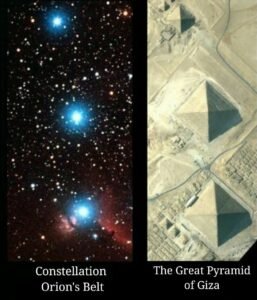
The 3 pyramids line up with Orion’s Belt. They were named Khufu (Cheops/The Great Pyramid), Khafre, and Menkaure after the kings for whom they were built.
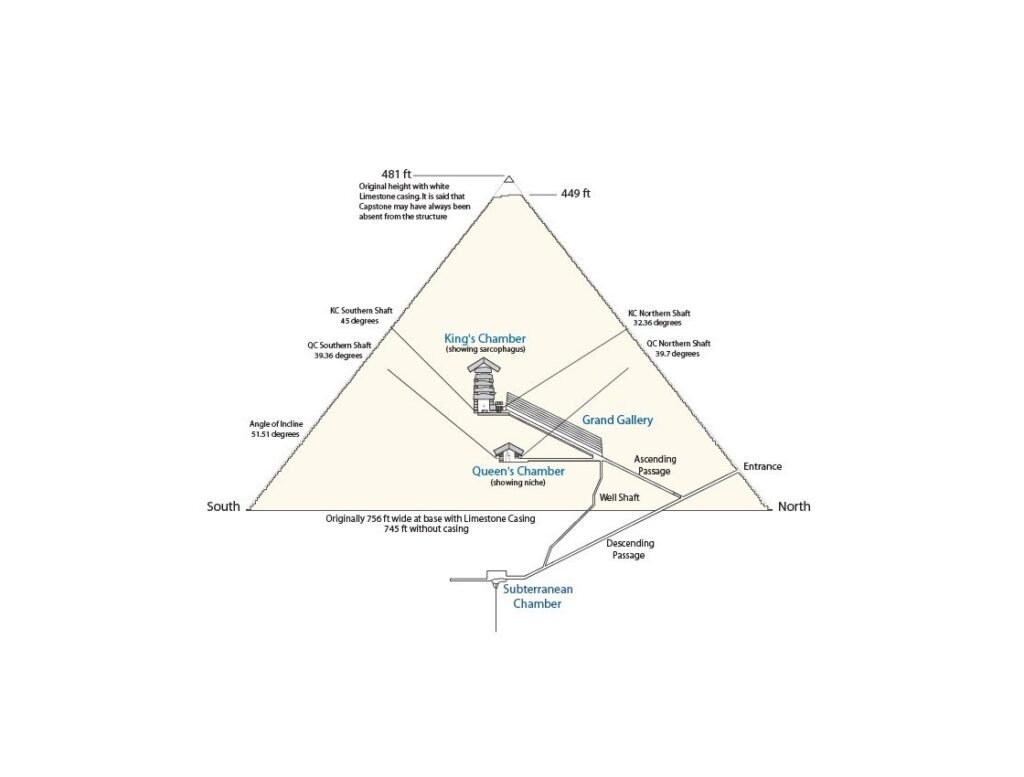
The Great Pyramid’s dimensions follow the Golden Ratio/Fibonacci Code on multiple levels.
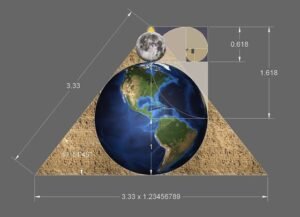
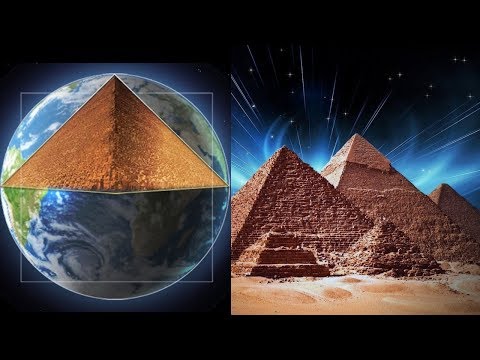
The height and width of the Great Pyramid are in proportion to the dimensions of Earth (1/43,200th the size of the Earth).
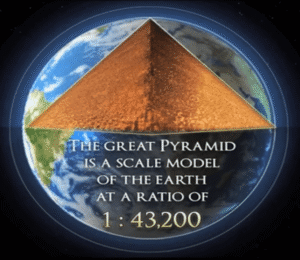
The Great Pyramid is the biggest pyramid on Earth and stands at the center of the earth’s land mass (the lines of latitude and longitude on which it lies pass through more land and less water than any others). It represents the earth’s northern hemisphere on a scale of 1:43,200: its perimeter equals a half minute of latitude at the equator; the perimeter of the corner sockets equals a half minute of equatorial longitude, or 1/43,200 of the earth’s circumference; and its height, including the platform, is 1/43,200 of the earth’s polar radius. Also, exact latitudinal coordinates of the Great Pyramid of Giza are 29.9792458°N which is exactly the same as the speed of light which travels at 299,792,458 metres per second. The exact longitudinal coordinates equal to Pi (π). In addition, the name of the great pyramid translates to “fire in the middle”, which is being interpreted as “the mean of light”.
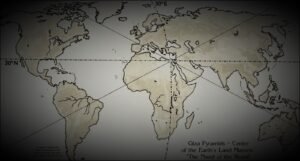
The pyramids lie on the longest stretch of land on Earth and are situated at the Golden Ratio/Fibonacci Code point of this stretch.
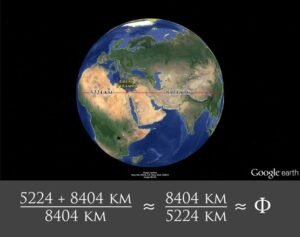
This also links with geographical positioning of other ancient sites. For example, the distances between Mecca and the North and South Poles are also said to form the Golden Ratio/Fibonacci Code. Similar ratios allegedly appear in latitude and longitude measurements. Even geological changes such as earthquakes and continental drift supposedly do not alter this relationship. Numerical correspondences between Quranic verses and Mecca include a verse containing 47 letters connecting the Golden Ratio/Fibonacci Code to the word “Mecca”. The first Quranic verse mentioning the Kaaba is said to correspond numerically with the Kaaba’s geographic coordinates.
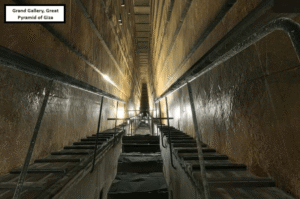
The latitude of the Grand Gallery inside the Great Pyramid of Giza that leads to the King’s Chamber are the exact digits of the speed of light in meters per second.
The height of the pyramids is the average height of all the mountain peaks on Earth.

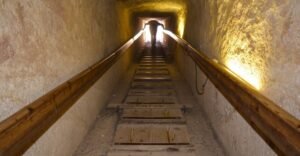
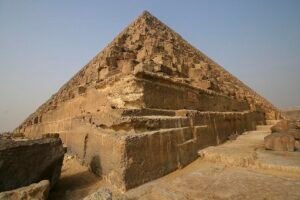
There are no hieroglyphs in the pyramids and no mummies have been found, suggesting it was not a tomb for a Pharaoh (the tunnels look more like shafts).
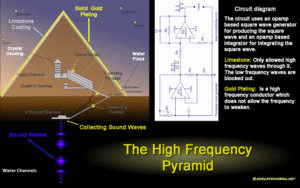
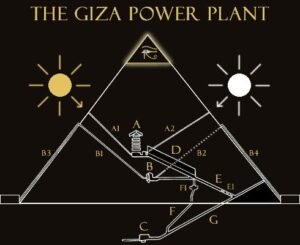
The pyramids had many electromagnetic properties and many now believe they were a highly sophisticated generator of energy:
- The Great Pyramid’s capstone was made of gold
- The pyramids were covered with highly polished limestone casing stones that could conduct electricity.
- The set up of the chambers in the pyramid and the rocks chosen can aid electrical flow and conduction of electricity.
- Some of the rocks inside the pyramid appear to be scorched by an electrical current.
- The Giza plateau (where the pyramids are located) is full of underground water channels and these high volumes of salt water pass through the underground cavities, capable of producing an electrical current (known as physio-electricity).
In the Great Pyramid, there are more than 2.5 million blocks that weigh 2-70 tons each.
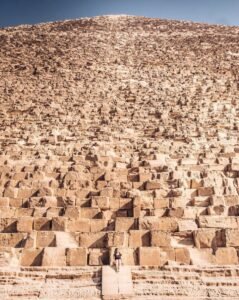
The pyramids have been constructed so precisely the stones fit within the millimeter.
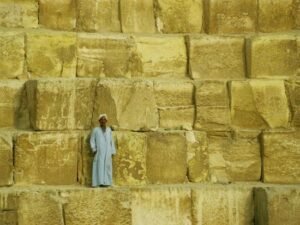
Nobody knows how objects so large, heavy and mathematically precise were constructed. This civilization was evidently highly advanced.
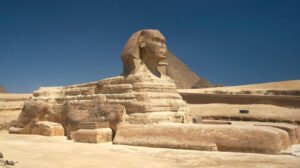
From his research (including impact on the pyramids and the Great Sphinx of Giza from not just sand storms, but evidence of water erosion, suggesting a period of global warming/higher sea levels), Graham Hancock believes that ancient Egypt was prevalent 12,000 years ago, unlike mainstream archaeologists that say it’s 4,500 years ago. he says “The moment the three stars of Orion’s Belt are due south of the meridian at dawn on the spring equinox, is also the exact moment that the great sphinx is looking at the constellation of Leo 12,500 years ago, not 4,500 years ago. 4,500 years ago the stars of Orion’s Belt didn’t match up and the sphinx was looking at the constellation of Taurus, which had much less significance in ancient values.”
Graham Hancock’s research suggests that the pyramids took hundreds of years, possibly thousands to build and the ancient Egyptians completed a monument that already stood to create the pyramids, as the three ground platforms are far older than the pyramids themselves. These ground platforms represent an epoch (a period in time) prior to the ancient Egyptians that they called Zep Tepi (translated into “the first time”), referring to a golden age of a highly advanced civilization.
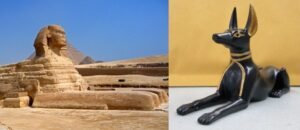
The ancient sphinx is also likely to have been carved down from an Anubis by a more recent pharaoh trying to claim it as his own, due to the disproportionate size of the head and the fact no sphinx is seen in ancient Egypt writings, unlike Anubis that is.
Graham Hancock Interviews and Additional Research on Ancient Egypt 🎥
Here are some videos of Graham Hancock’s research and his portfolio of books can be viewed here. Key points discussed are listed below.
The pyramids and the Sphinx at Giza are not simple tombs built in 2500 BCE, but highly advanced, astronomically encoded monuments built by a much older, unknown civilization, possibly dating back to the end of the last Ice Age (around 10,500 BCE).
1. What the Pyramids are Said To Be
Mainstream archaeology view:
- Built around 2500 BCE
- Tombs of Pharaohs (Khufu, Khafre, Menkaure)
- Products of Old Kingdom Egypt
Alternative view (Graham Hancock, Robert Bauval, John Anthony West):
- No Pharaoh burials were found inside.
- No inscriptions naming builders inside the Great Pyramid.
- The structures are too precise and too advanced to be simple tombs.
- Their purpose is unknown and likely older than believed.
2. Scale, Precision, & “Impossible Engineering”
The Great Pyramid is described as:
- Approximately 6 million tons of stone.
- Approximately 2.5 million blocks.
- Perfect geometric precision.
- Alignment to true north within a tiny fraction of a degree.
This suggests:
- Modern engineers would struggle to replicate it at the same scale and precision.
- Slaves could not reasonably have achieved such accuracy.
- It implies a highly skilled, organized, and knowledgeable civilization.
3. Astronomical Alignment Theory
The pyramids are astronomically encoded:
- The three pyramids of Giza mirror the stars in Orion’s Belt.
- The entire Giza complex reflects a celestial map.
- Architecture encodes star positions, Earth’s orientation, and precession of the equinoxes.
4. Earth’s Precession (Why it Matters)
They emphasize a key astronomical cycle:
- Earth wobbles on its axis approximately every 26,000 years and this changes star positions over time.
- The builders understood this cycle and encoded it into architecture.
- The number 43,200 (related to 72 × 600) appears in the architecture and symbolically in measurements of Earth.
- The builders had advanced astronomical knowledge.
5. Earth Measurement Encoding
Hancock argues the Great Pyramid encodes Earth’s dimensions:
- Height × 43,200 ≈ Earth’s polar radius.
- Base perimeter × 43,200 ≈ Earth’s equatorial circumference.
- The pyramid is a scale model of Earth itself.
6. Alignment to True North & Equinoxes
- The Great Pyramid is aligned almost perfectly to true north, better aligned than modern observatories.
- Structures also align with equinox sunrise and solar cycles (e.g. The Great Sphinx of Giza faces sunrise on the equinox).
7. Sphinx & Temples
Hancock and colleagues argue:
- The Sphinx may be far older than 2500 BCE.
- Possible water erosion suggests much wetter climate (older Sahara phase).
- Hidden chambers may exist beneath it.
- They reject the idea that it was simply carved for Pharaoh Khafre’s ego.
8. Fingerprints of The Gods
In Fingerprints of the Gods, Hancock argues that Earth shows evidence of a lost Ice Age civilization. This civilization was:
- Advanced in astronomy, architecture, and global navigation.
- Destroyed by a cataclysm at the end of the last Ice Age (around 10,500 BCE).
- Survivors spread knowledge to later civilizations; Egypt, Mesopotamia, and Mesoamerica.
- Spread knowledge is evident in geological clues, mythology comparisons, and ancient architecture patterns
- History is missing an earlier advanced chapter.
9. Graham Hancock, Robert Bauval, & John Anthony West Video
The video emphasizes that Egypt preserves knowledge from a much older civilization and Egyptology is overly confident in the “tomb theory”. The pyramids are:
- Astronomical instruments.
- Energy/knowledge monuments (in speculative interpretations).
- Part of a larger symbolic system tied to stars.
- Part of a unified astronomical plan (as is The Sphinx).
10. Mainstream vs Alternative View
Mainstream archaeology – Pyramids are tombs built around 2500 BCE by skilled ancient Egyptians using known tools.
Alternative view – Pyramids were built for astronomical, symbolic, and possibly scientific purposes far earlier (around 10,500 BCE or earlier) by a lost advanced civilization.
In summary, the Giza pyramids and Sphinx are not simple tombs, but part of a highly sophisticated ancient system encoding astronomy, Earth science, and cosmic knowledge, likely inherited from a lost Ice Age civilization.



Research and Profound Insights on Ancient Egypt 👀
Here are a lot more videos on ancient Egypt from other sources.
Video 1 – New Evidence! Mysterious Inscriptions & Encodings Inside the Pyramids! (Robert Edward Grant)
The video argues that the Great Pyramid contains hidden symbolic, geometric, and mathematical “codes” that were intentionally built into its structure. Robert Edward Grant suggests that certain internal markings and stone arrangements are not random or natural quarry traces, but may represent deliberate encoded knowledge, advanced geometry, mathematical constants (π – pi, φ – Golden Ratio, and e – Euler’s number), or universal principles.
He claims these patterns reflect advanced understanding of geometry, Earth proportions, and possibly universal constants, and that the pyramid may function as a kind of information system or knowledge archive rather than just a tomb (like a storage system for knowledge or monument encoding cosmological understanding).
The pyramids embed intentional mathematical design and symbolic encoding, pointing to advanced ancient knowledge.

Videos 2-10 – ‘Bright Insight’ on The Pyramids
In these videos, Jimmy from Bright Insight shares different research into the the Great Pyramid of Giza and Great Sphinx of Giza that suggest civilization then was far older, more advanced, and more mysterious than mainstream history claims.
1. Mainstream History Is Wrong or Incomplete (Egyptologists and archaeologists)
- Dismisses new discoveries.
- Ignore contradictions.
- Possibly hides or controls information.
2. Pyramids Are Not Tombs
- No mummies found in pyramids.
- No typical tomb decorations inside.
- Pyramids are more likely to be technological structures, energy systems, or something unknown and advanced.
3. Advanced Lost Technology
- The pyramids may have harnessed or focused energy, used sound, resonance, or electromagnetic properties.
- This links to Nikola Tesla’s wireless energy transmission by using Earth’s natural systems for energy; aquifers, tunnels, and chambers beneath Giza.
4. Construction Is “Unexplained”
- Massive stone blocks (multi-ton to 1000+ tons).
- Extreme precision (machine-like accuracy).
- Known ancient tools and methods are insufficient, so some advanced technology must have existed.
5. Mathematical & Cosmic Knowledge
- Repeated numbers like 432 and 108
- Connections between pyramid dimensions, Earth measurements, time (seconds/minutes), and ancient religions and astronomy.
- Hidden universal knowledge or design.
6. Lost Civilization & Catastrophe
- A highly advanced civilization existed before known history.
- It was destroyed by a global catastrophe (around 12,000-13,000 years ago).
- Later civilizations (like dynastic Egyptians) inherited and reused older structures.
7. Older Dating of the Great Sphinx of Giza
- Possibly 20,000-30,000 years old based on erosion analysis (e.g. Robert Schoch).
8. DNA & Migration Challenges
- Genetic studies suggest human migration history is misunderstood.
- Ancient populations don’t match modern assumptions.
- Global connections are earlier than believed.
9. Hidden Structures & Suppression
- Voids inside pyramids.
- Underground tunnels and chambers.
- Restricted sites like Zawyet El Aryan.
- Authorities delay or block exploration.
- Important discoveries are hidden or ignored.
10. Summary
- Human history is largely forgotten or misrepresented.
- Ancient civilizations had advanced knowledge and technology.
- Key monuments are remnants of this lost world.
- Modern institutions are either wrong, slow, or intentionally dismissive.
- Mainstream history teachings overall hide evidence of a lost, highly advanced civilization.


Videos 11-16 – Additional Insights into The Pyramids
These videos present alternative-history interpretations of the Great Pyramid of Giza, arguing against the mainstream view that it was simply a tomb built for Egyptian pharaohs. Instead, they propose that the pyramid was part of an advanced, possibly prehistoric technological system.
A major shared idea is that ancient civilizations possessed highly advanced knowledge, far beyond what is currently accepted by archaeology and that this knowledge was deliberately encoded in monuments, myths, and measurement systems. The Great Pyramid is portrayed as a central “repository” of this lost knowledge.
1. Lost advanced civilization
The pyramid is linked to the idea of a global prehistoric civilization that understood advanced mathematics, astronomy, engineering, and physics. This civilization is said to have existed before catastrophic events (such as Ice Age disasters or global floods) and left knowledge behind for future generations.
2. Pyramids as technological structures
Rather than tombs, the pyramids are proposed to be functional machines. They are described as encoding universal constants (π, φ, e), Earth measurements, and cosmic cycles and an energy system or power plant capable of generating and transmitting electricity.
3. Hidden scientific encoding
Ancient monuments encode mathematical relationships involving:
- π (pi), φ (Golden Ratio), and e (Euler’s number).
- Earth’s circumference and geodesy.
- Time cycles (seconds per day, lunar and solar cycles).
- Repeating symbolic numbers like 5, 6, 12, and 864.
4. Measurement systems are “ancient and connected”
The foot, cubit, and meter are argued to be deeply interconnected systems derived from the same ancient source, rather than independent inventions. The pyramid is portrayed as a convergence point where these systems align mathematically.
5. Ancient technology and electricity
Technological theory:
- Pyramid materials (granite, limestone, dolomite) have conductive or piezoelectric properties.
- Underground water is an energy source (and salt water is a conductor of electricity).
- The structure is described as a possible electrical generator or wireless transmitter.
- The Serapeum granite boxes and hidden chambers could be electrical components (capacitors, coils, wiring systems).
6. Connection to modern science and figures
Modern scientific figures and ideas:
- Isaac Newton was influenced by pyramid knowledge.
- Nikola Tesla studied ancient knowledge and designed wireless natural energy systems.
- Ancient artifacts like the “Baghdad Battery” are cited as evidence that electricity existed in antiquity.
7. Linking to Tesla’s strong beliefs on the powers of frequency over reality, some also believe that the pyramids were “summoned” into existence using frequencies based on interpretations of ancient texts such as the Emerald Tablets. This also links with the story of King Soloman who is said to have built his temple by summoning demons and trapping them in two triangles (or the Star of David as seen in Judaism and the Israeli flag).
8. Criticism of mainstream archaeology
Mainstream archaeology rejects these interpretations due to disciplinary bias, suggesting that conventional explanations (like tomb theory) are incomplete or constrained by academic assumptions.
9. Summary
The Great Pyramid of Giza is presented not as a tomb, but as a highly sophisticated artifact from an ancient advanced civilization, encoding universal mathematical knowledge and functioning as a large-scale energy generator and transmitter. Modern science is overlooking or dismissing evidence that would fundamentally rewrite human history.


Ancient Egyptian Gods and Pharaohs List, Facts and Images 🙏
The ancient Egyptian language was written using hieroglyphics, a complex system of pictorial writing that combined logographic, syllabic, and alphabetic elements. From the Hieroglyphs many interesting things have been translated about life after death and their Gods. The ancient Egyptian gods were a vast and complex pantheon of deities worshiped for thousands of years. Here are some of the most important ones.
Major Gods and Goddesses:
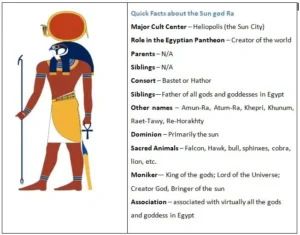
Ra (also known as Re, Amun-Ra, Khepri, Ra-Horakhty and Atum) – The sun god, creator of the world, and king of the gods.
Osiris – God of the afterlife, resurrection, and fertility.
Isis – Goddess of magic, motherhood, and wisdom; wife of Osiris and mother of Horus.
Horus – God of the sky, kingship, and protection; often depicted as a falcon. This is where the Eye of Horus originates (linked to the All-Seeing Eye and pineal gland).
Anubis – God of mummification and the afterlife, depicted as a jackal.
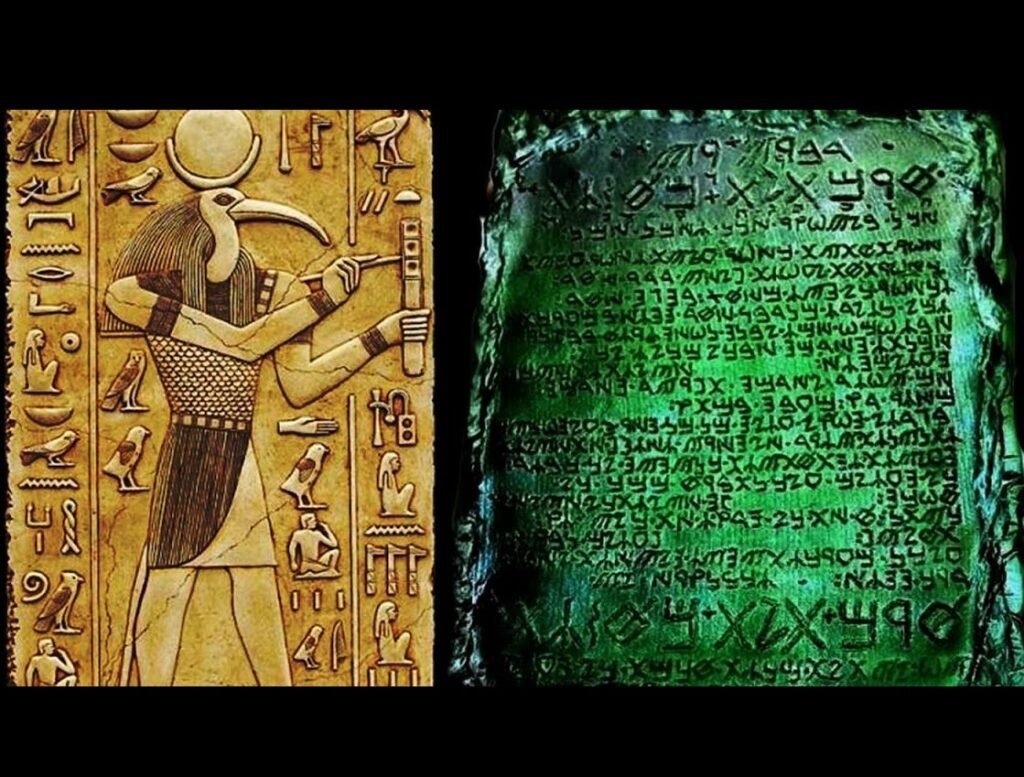
Thoth – God of wisdom, writing, and knowledge. Author of the Emerald Tablets.
Ma’at – Goddess of truth, justice, and cosmic order.
Seth (Set) – God of chaos, storms, and war; often depicted as an ambiguous animal.
Hathor – Goddess of love, beauty, music, and joy.
Ptah – Creator god and patron of craftsmen and architects.
Amun – A major god of creation, later merged with Ra as Amun-Ra.
Bastet – Goddess of home, fertility, and protection; depicted as a lioness or cat.
Sekhmet – Warrior goddess of destruction and healing, depicted as a lioness.
Nut – Sky goddess who gave birth to the sun each morning.
Geb – Earth god and father of Osiris, Isis, Seth, and Nephthys.
Nephthys – Goddess of mourning, protection, and the night.
Taweret – Protective goddess of childbirth, depicted as a hippo.
Sobek – Crocodile god of strength, power, and the Nile.
Khnum – Ram-headed god of creation and the Nile’s waters.
Bes – Dwarf god of protection, childbirth, and humor.
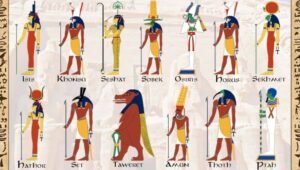
Cosmic and Underworld Deities:
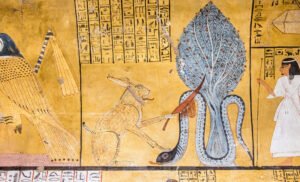
Apophis (Apep) – Serpent god of chaos and enemy of Ra. Drawn next to a tree, symbolic of the snake/serpent next to the apple tree in the Garden of Eden.
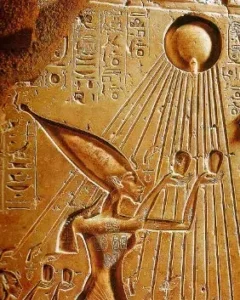
Aten – The sun disc worshiped as a single god during Akhenaten’s reign.
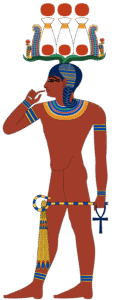
Heka – God of magic and medicine.
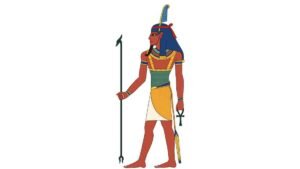
Tefnut – Goddess of moisture and rain (image 4 below).
Shu – God of air and light (image 5 below).
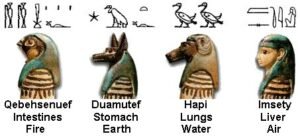
Duamutef, Qebehsenuef, Hapi, and Imsety – The four sons of Horus, protectors of the organs of the dead (image 6 below).
Apophis (Apep):
Aten:
Heka:
Shu:
The four sons of Horus:
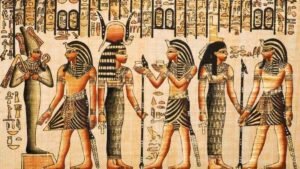
The Egyptian Pharaohs were the kings/queens/rulers of ancient Egypt, considered both political and religious leaders. They were seen as divine or semi-divine figures, believed to be the earthly representatives of gods, particularly Horus and later Amun-Ra. Pharaohs held absolute power and were responsible for maintaining ma’at (order, balance, and justice) in their kingdom.
Here are some notable Pharaohs of Ancient Egypt:
Narmer (Menes) (c. 3100 BCE) – Unified Upper and Lower Egypt, founding the First Dynasty.
Djoser (c. 2670 BCE) – Commissioned the Step Pyramid at Saqqara, the first large-scale stone structure.
Sneferu (c. 2600 BCE) – Built the first true pyramid, the Red Pyramid, and improved pyramid construction techniques.
Khufu (Cheops) (c. 2580 BCE) – Commissioned the Great Pyramid of Giza, one of the Seven Wonders of the Ancient World.
Hatshepsut (c. 1479–1458 BCE) – One of the most successful female pharaohs, known for extensive trade and temple-building.
Thutmose III (c. 1479–1425 BCE) – Expanded Egypt to its greatest territorial extent.
Akhenaten (c. 1353–1336 BCE) – Introduced monotheism, worshipping Aten, the sun disk, instead of traditional gods.
Tutankhamun (King Tut) (c. 1332–1323 BCE) – Famous for his intact tomb, rediscovered in 1922.
Ramses II (Ramses the Great) (c. 1279–1213 BCE) – One of the longest-reigning and most powerful pharaohs, known for his military conquests and the construction of Abu Simbel.
Cleopatra VII (51–30 BCE) – The last active ruler of Egypt, known for her political alliances with Julius Caesar and Mark Antony before Egypt fell to Rome.
Ancient Egyptian pharaohs:
You can read more on ancient history via his category here. You can also read about pyramids around the world and pyramidical anomalies on Mars and the moon here.