
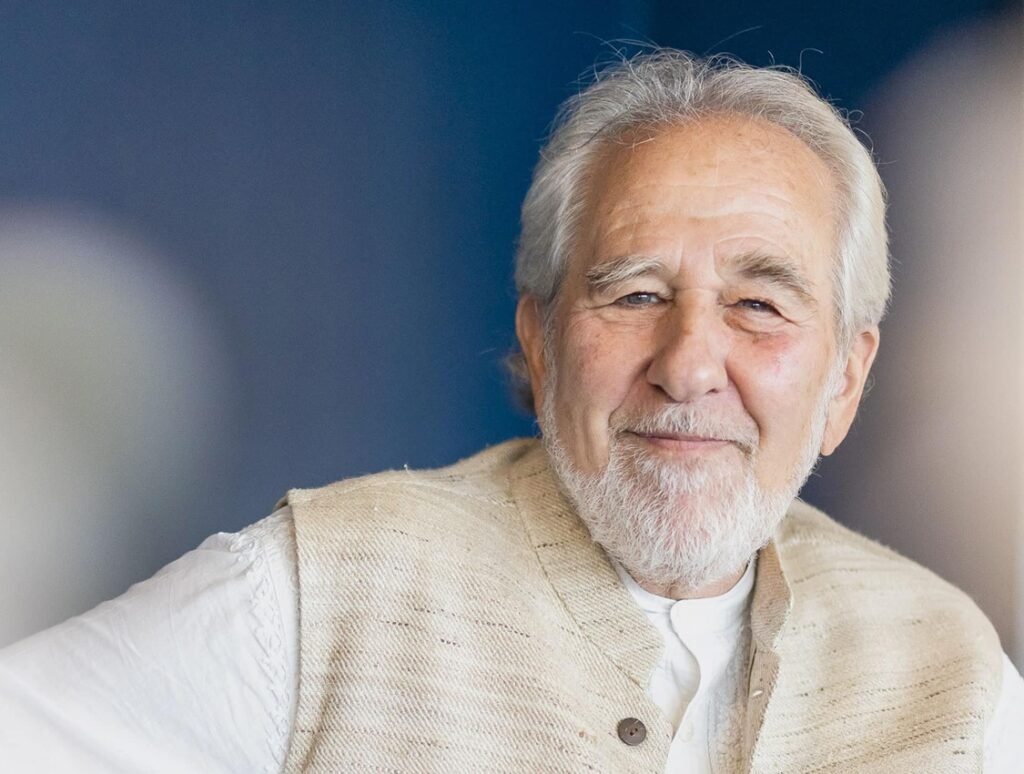
Who is Dr. Bruce Lipton?🧑🔬
Stem cell biologist, bestselling author and recipient of the Goi Peace Award, Dr. Bruce Lipton is internationally known for his work and conferences. His most famous books include
The Biology of Belief, Spontaneous Evolution, and The Honeymoon Effect.
He is best known for his findings that gene expression is influenced (via epigenetics) by environmental factors. In turn, people have a greater impact on their health than genetic research had previously determined.
He began his scientific career as a cell biologist. He received his PhD Degree from the University of Virginia at Charlottesville before joining the Department of Anatomy at the University of Wisconsin’s School of Medicine in 1973. However, as his research developed, he felt all that he had initially learned and was teaching was incorrect.
He discusses findings such as how a person’s beliefs and feelings (e.g. positive thoughts, thoughts of feeling strong and healthy etc.) have a profound influence on health, much more so than one’s genes and that subconscious programming can influence our perception of reality. His epigenetics research suggests that energy psychology techniques can shift how we think and perceive, potentially leading to improved health and life outcomes. Energy psychology methods, like PSYCH-K, strengthen the mind-body connection and may help reduce stress, heal trauma and address self-limiting beliefs.
A basic example of this is if your family have a history of getting cancer, but you are in a positive mindset, you will not activate these genes. His research has even shown that adopted children get the same illnesses as the families that raise them, due to sharing the same beliefs and mindsets, despite having different gene pools. His research also touches on the placebo effect:
“A minimum of one third of all medical intervention is a placebo effect. That’s the result of positive thinking (and not of drugs)”.
The placebo effect also links to the Law of Assumption; what you assume becomes a reality.
He also talks on how the pharmaceutical industry and universities are only just beginning to accept these findings and can feel threatened by this change in findings.
“His research on muscular dystrophy and studies employing cloned human stem cells focused upon the molecular mechanisms controlling cell behavior. An experimental tissue transplantation technique developed by Dr. Lipton and colleague Dr. Ed Schultz was published in the journal Science and subsequently employed as a novel form of human genetic engineering.”
Dr. Bruce Lipton Books and Quotes 📚
Here are some more of his many famous quotes from his books:
“We can control our lives by controlling our perceptions.”
“We are not victims of our genes, but masters of our fates, able to create lives overflowing with peace, happiness, and love.”
“Our beliefs control our bodies, our minds, and thus our lives.”
“The character of our life is based upon how we perceive it.”
“Just like a single cell, the character of our lives is determined not by our genes but by our responses to the environmental signals that propel life.”
“Here is the amazing thing: the caterpillar and the butterfly have the exact same DNA. They are the same organism but are receiving and responding to a different organizing signal.”
“I was exhilarated by the new realization that I could change the character of my life by changing my beliefs. I was instantly energized because I realized that there was a science-based path that would take me from my job as a perennial “victim” to my new position as “co-creator” of my destiny.”
“What quantum physics teaches us is that everything we thought was physical is not physical.”
“Your perspective is always limited by how much you know. Expand your knowledge and you will transform your mind.”
“We are architects of our experience and can live heaven on Earth.”
Dr. Bruce Lipton Videos 🎥
Here are some Dr. Bruce Lipton videos discussing his work and findings.
Video 1 – Bruce Lipton The Biology of Belief Full Lecture
The first video is a Dr. Bruce Lipton lecture that discusses his book The Biology of Belief. The main points are listed below.
1. You are not controlled by your genes
- Genes do not determine your life in a fixed way.
- Genes are blueprints, not “destiny”.
- What matters more is the environment of the cell.
- Your perceptions and beliefs influence that environment.
- Biology is driven by signals, not genetic programming alone.
2. The Cell Membrane is the “Brain” of the Cell
- The cell membrane (not the nucleus) is the real control center.
- It receives signals from the environment.
- It decides how the cell responds.
- Environment affects the cell membrane, which affects gene expression.
- This is epigenetics (genes being turned on/off by environment).
3. Epigenetics: Environment Controls Genes
- Genes can be activated or suppressed.
- External conditions (nutrition, stress, emotions) matter more than DNA alone.
- “Information” from outside the cell shapes biological outcomes.
- He uses this to argue against strict genetic determinism.
4. Beliefs and Perception Affect Biology
- Your thoughts and beliefs influence your body chemistry.
- Perception triggers stress or growth responses.
- Positive or negative thinking can shift physiological states.
- He links this to placebo effect and stress response (fight-or-flight vs growth/healing mode).
5. Two Biological Modes: Growth vs Protection
- Cells (and humans) operate in two main states.
- Growth mode; learning, healing, and regeneration.
- Protection mode; stress response, inflammation, and survival behavior.
- Chronic stress keeps the body stuck in protection mode, harming health.
6. Development Begins Before Conscious Awareness
- Early childhood conditioning matters greatly.
- Subconscious programming forms beliefs before we are aware of them.
- These subconscious beliefs run much of adult behavior automatically.
7. Mind-Body-Environment Connection
- Mind and matter are deeply interconnected.
- Human biology is influenced by perception of reality.
- “Consciousness” plays a major role in shaping experience.
8. Big Takeaway
- You are not a victim of your genes.
- Your environment and beliefs help shape your biology and health.

Video 2 – What We Think, We Become: Dr. Bruce Lipton (Epigenetics)
Dr. Bruce Lipton discusses epigenetics in this lecture. Some of the key points are listed below.
1. Genes don’t control life,environment does
- DNA is not self-directing.
- Gene expression is controlled by environmental signals.
- This shifts biology toward epigenetics (genes respond to signals, not destiny).
- Cells respond to their surroundings, not just their genetic code.
2. The body is like a “petri dish”
- Cells in a dish behave based on the culture medium,
- In the body, the “culture medium” is blood, therefore blood chemistry determines cell behavior.
- So your body’s health depends heavily on what’s in your blood.
3. What controls the blood?
- Nutrition
- Food becomes part of the blood.
- Healthy nutrients support healthy cells.
- Toxins (industrial food, chemicals) disrupt cell function and gene expression.
- Information (signals)
- Hormones, neurotransmitters, and growth factors circulate in blood.
- These act as “instructions” for cells.
4. The brain creates the “internal environment”
- The brain interprets the external world.
- Then sends signals through nerves and hormones.
- These signals become the chemistry in the blood.
- So perception leads to brain response, that affects blood chemistry and then cell behavior.
- Cells don’t experience reality directly, they respond to your interpretation of reality (linking to the Law of Attraction).
5. Emotions change biology (different perceptions produce different chemistry)
- Positive state (love, safety):
- Dopamine (pleasure).
- Oxytocin (bonding).
- Vasopressin (attachment).
- Growth hormone (repair and health).
- Cells enter growth and healing mode.
- Fear/stress state
- Stress hormones.
- Inflammatory signals.
- Cells enter protection mode.
6. Cells can’t do growth and protection at the same time (mutually exclusive states)
- Growth (open, building, healing).
- Protection (defensive, closed, survival mode).
🧬 7. Stress is the major driver of disease (not genes)
- Chronic stress forces the body into protection, which reduces health.
- Only around 1% of disease is due to defective genes.
- Most illness comes from disrupted signals, especially stress.
- Three major signal disruptors:
- Trauma (physical interruption of nerve signals).
- Toxins (chemical interference).
- Thoughts (emotional/perceptual interpretation).
- Stress is the combined result of these factors
- 75-90% of doctor visits are stress-related.
8. Stress (especially chronic stress) damages the body in multiple ways
- Reduces blood flow to organs (like the gut).
- Suppresses immune function.
- Shifts energy toward fight-or-flight.
- Reduces activity in the conscious brain (prefrontal cortex).
- This results in less healing, more disease, and reduced cognitive function.
9. Telomeres and aging
- Telomeres are protective caps on DNA.
- They shorten each time cells divide.
- When too short, aging and disease increase.
- Stress is said to accelerate telomere shortening.
10. Telomerase and longevity
- There is an enzyme, telomerase, that can rebuild telomeres.
- Telomerase is influenced by lifestyle and mindset.
- Decreased telomerase is caused by:
- Chronic stress.
- Trauma.
- Violence or abuse.
- Loneliness/lack of love.
- Negative outlook.
- No purpose in life.
- Increased telomerase is caused by:
- Love and connection.
- Positive outlook.
- Exercise.
- Good nutrition.
- Gratitude.
- Having purpose/being in service.
11. Big conclusion
- Biology is controlled by perception and environment.
- Thoughts effect chemistry, which affects gene expression.
- Stress is the central cause of illness.
- Health improves when stress is reduced and positive states dominate.
- We are not victims of our genes; we are influenced by our perceptions and environment.

Video 3 – Bruce Lipton, Ph.D. Epigenetics: The science of Human Empowerment
In this lecture, Dr. Bruce Lipton, challenges the traditional “central dogma” of biology, which claims that DNA controls life in a one-way flow (DNA → RNA → proteins). He argues this idea, popularized by scientists like Francis Crick and James Watson was originally a hypothesis, not a proven fact, yet it became accepted as medical dogma. This led to the belief that humans are essentially “genetic machines” with little control over their biology.
He explains instead that genes do not directly control life. Genes are just blueprints for making proteins, and they are not “on/off switches”. The real control system is the cell membrane and the environment around the cell.
Environmental signals control biology through “signal transduction”. Cells respond to external signals via receptors in the membrane, which trigger internal protein behavior. These protein movements determine cell function. In some cases, signals also influence gene expression in the nucleus, this is the basis of epigenetics (meaning “control above genes”).
He explains his stem cell experiments where identical cells became muscle, bone, or fat depending entirely on the culture medium. This demonstrates that environment, not genes, determines cell fate. He extends this idea to humans:
- The body is like a “skin-covered petri dish”.
- The blood is the culture medium.
- The nervous system and mind regulate the chemistry of that blood.
Perception becomes central; the brain interprets experiences and releases chemicals into the body accordingly. Love produces growth-promoting chemicals (like dopamine, oxytocin, growth hormone), while fear produces stress hormones that shut down growth and immunity.
He argues that chronic stress is a major cause of disease because it:
- Suppresses immune function.
- Reduces growth and repair.
- Shifts the body into survival mode.
- Impairs higher brain function (reducing rational thinking).
He also discusses telomeres, structures that protect DNA during replication. Stress and negative experiences can shorten telomeres (linked to aging and disease), while positive states like love, purpose, exercise, good nutrition, and service can support telomerase, the enzyme that maintains telomeres.
Overall conclusion:
- Genes are not destiny.
- Environment, perception, and mindset shape gene expression.
- Humans are not victims of genetics, but active participants empowered in regulating their biology through thoughts, emotions, and lifestyle.
He also references research by figures such as physicist Dr. Dean Ornish (who shows lifestyle changes altering gene expression) and ideas aligned with behavioral epigenetics. The broader message is that belief systems and personal empowerment strongly influence health outcomes.

Video 4 – Dr. Bruce Lipton On How Physical Thoughts Travel Outside Of Our Bodies & Affects Others
In this video, Dr. Bruce Lipton discusses some similar findings to the other videos, as well as some extra perspectives. These are summarized below.
As previously touched on:
- Cells respond to signals from their environment, not fixed genetic programming.
- Your body’s chemistry is shaped by your thoughts, emotions, and stress levels.
- Stress puts the body into survival mode, while safety and positive emotions support healing and growth.
- The “placebo effect” shows that belief alone can influence the body (linking to the Law of Assumption).
Additional perspectives:
Identity is shaped by perception, not reality
- Two people can experience the same event differently.
- Their bodies respond differently because perception differs.
- For example identical twins with identical DNA can get different diseases/health outcomes.
- Perception is more biologically important than external reality.
Energy, fields, and “information biology”
- Everything is energy and vibration (linking to Nikola Tesla’s findings and ancient knowledge).
- The body is influenced by invisible fields of information.
- Consciousness may extend beyond the brain:
- Thoughts are “broadcast” into a field.
- Cells respond to informational signals.
Consciousness is a “broadcast” not confined to body
- You are not just your brain/body, you are a “signal” received by the body.
- Your body is like a television and your consciousness is like a broadcast signal.
- Death is the TV turning off, not the broadcast disappearing (linking to Life After Death research).
Subconscious programming and psychology controls most behavior:
- Conscious mind = intentions.
- Subconscious mind = autopilot (~95% of behavior).
- People consciously want change, but subconscious programs override it.
- Real change requires reprogramming subconscious patterns, not just positive thinking.
His main message is:
You are not controlled by your genes, you are strongly influenced by your environment and mindset. As such, genes don’t control your life, instead, you are empowered to control your biological health by how you perceive your environment and experiences (your mental health).

Video 5 – Using 100% of Your Brain (Dr. Bruce H. Lipton)
This video Dr. Bruce Lipton discusses the “10% of the Brain” myth and whole brain thinking.
- The idea that we only use 10% of our brain is false.
- It came from a misunderstanding that only around 10% of brain cells are neurons, while around 90% are glial cells.
- Glial cells were once thought useless, but now known to be essential for brain function.
- We actually have access to 100% of our brain, but we often run on habitual patterns, so we don’t use it fully.
- The brain has two hemispheres; left for logic and right for emotion/creativity.
- Most people operate in “brain dominance” (one side at a time), which limits thinking.
- When both sides work together (“hemi-sync”) learning improves, thinking becomes more balanced, and we feel calmer and more effective.
- Simple actions (like crossing arms/legs) may help integrate both sides.
- Break repetitive habits and stay mindful to engage your full brain potential.
Video 6 – The Healing Power of Gratitude: Bruce Lipton Explains Telomeres
As touched on in previous videos, in this talk Dr. Bruce Lipton summarizes gratitude, telomeres, and longevity.
- Inside your cells are telomeres (protective DNA ends) that shorten as cells divide, linked to aging.
- An enzyme called telomerase can rebuild and extend these telomeres.
- Your lifestyle and mindset influence this process.
- Things that shorten lifespan are poor nutrition, stress, trauma, abuse, lack of love or self-worth, and having no purpose in life.
- Things that extend lifespan are good nutrition and exercise, gratitude and happiness, a positive outlook, self-love, relationships, and having a sense of purpose or service.
- Your beliefs, emotions, and outlook can biologically influence aging.

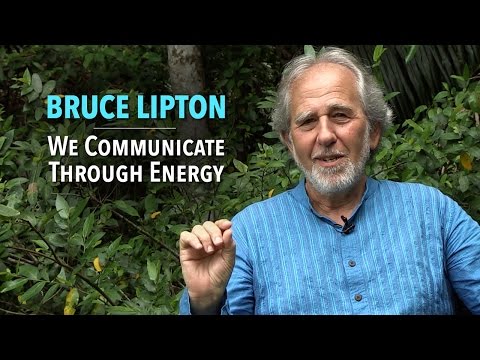
Video 7 – Bruce Lipton: We Communicate Through Energy
In this video, Dr. Bruce Lipton explains how we communicate through energy, in particular the evolution of consciousness and energy.
- Humanity is not evolving physically, but evolving in consciousness.
- Old worldview:
- We are separate individuals.
- Life is competition.
- New perspective (influenced by quantum physics):
- Everything is energy, not solid matter (as discovered in The Double Slit Experiment).
- We are interconnected energy fields.
- Our thoughts and feelings act like broadcasts that affect others.
- Feelings are more reliable than words:
- Good feelings create alignment/support.
- Bad feelings create misalignment.
- The mind can rationalize anything, but the heart (feelings) gives more accurate guidance.
- Trust your feelings and recognize interconnectedness to navigate life better.
Videos 8-11 – Rewiring the Subconscious Mind & The Paradigm Shift
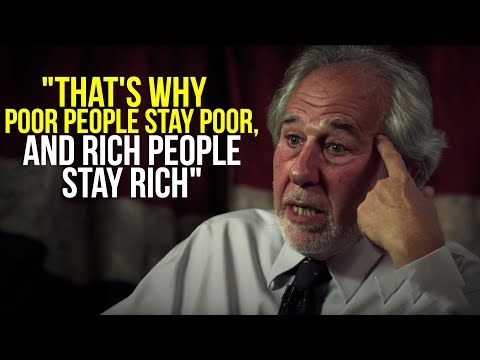
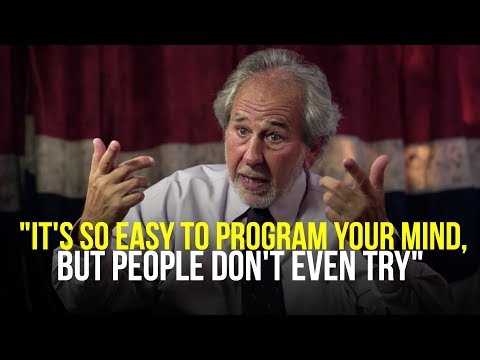
Like Dr. Bob Proctor, Dr. Bruce Lipton communicates the benefits of rewiring the subconscious mind (replacing bad habits with new self-serving habits). Here are some videos that focus on this side side of his work. Key points are listed below.
1. Human behavior is mostly unconscious
- 95% of life is automatic programming.
- Conscious willpower has limited control.
2. Early life shapes personality
- Childhood experiences form core belief systems.
- These beliefs run adult behavior like software.
3. Life is “programmed behavior in action”
- Success or struggle reflects internal programming.
- People repeat patterns even when they consciously want change.
4. Peak human experiences break programming
- Falling in love temporarily overrides autopilot.
- Presence replaces habit.
- Life feels more vivid and joyful.
5. The problem is not awareness, it’s consistency
- Conscious insights don’t automatically change behavior.
- Only repeated reprogramming changes subconscious output.
6. Reprogramming the subconscious mind
- Repetition (The Main Method After Childhood)
- The subconscious learns like a habit system, not through insight, but through repeated experience.
- Reading or understanding something once does not change behavior.
- Change happens when you:
- Repeat a behavior.
- Repeat a thought pattern.
- Repeat an action consistently.
- For example:
- Saying “I am confident” once has no effect.
- Saying/acting it daily for long enough creates automatic programming.
- Repetition turns conscious choice into unconscious habit.
- Hypnosis/“Theta State” Reprogramming
- The subconscious is most “open” when the conscious mind is less active.
- This happens in:
- Early childhood (naturally).
- Before sleep.
- Just waking up.
- Hypnosis-like relaxed states.
- How it’s used:
- Listening to affirmations or “programming” audio.
- Just as you fall asleep (or wake up).
- While the mind is relaxed or drifting.
- Why he emphasizes this:
- Conscious mind has filters and doubts.
- Subconscious mind accepts input more directly in theta states.
- You bypass the “critical thinking filter” and install new patterns directly
- “Fake it till you make it” (Behavior First)
- Acting as if you already have the trait eventually rewires identity (again linking to the Law of Assumption).
- You don’t wait to “feel confident” first, you repeatedly behave as a confident person would.
- Over time, behavior becomes habit and habit becomes identity.
- Behavior changes belief, not the other way around.
- Sleep Programming (Audio + Affirmations)
- The moments before sleep are “gateway states” into the subconscious.
- Playing recorded affirmations or desired beliefs and letting them run as you fall asleep reprograms the subconscious.
- The conscious mind disengages and the subconscious mind absorbs repeated messages.
- Sleep is used as a passive reprogramming window.
- Habit Replacement (Not Just Removal)
- You don’t delete subconscious programs, you replace them.
- Process:
- Notice a limiting pattern (e.g. anxiety, procrastination).
- Create a new supportive behavior.
- Repeat it until it overrides the old one.
- Old programs fade when new ones are consistently reinforced.
- Key Diagnostic Step (Important in his system)
- Look at your life right now and identify where you struggle.
- Struggle is subconscious resistance.
- Ease is aligned programming.
- Reprogramming starts with awareness of “what isn’t working”.
7. Summary
- Human experience is largely driven by subconscious conditioning.
- Moments of presence (like love or mindfulness) show what life feels like when those programs are temporarily bypassed.
- Lasting change requires rewriting the underlying patterns.
- The subconscious is not changed by insight, it is changed by repeated experience in low-resistance mental states (habit, emotion, or relaxed awareness).
- We are architects of our experience and can live heaven on Earth.


Video 12 – Embrace The Paradigm Shift by Bruce Lipton
Again, like Dr. Bob Proctor, Dr. Bruce Lipton discusses paradigm shifts. In this video, the context of the paradigm shift is attributed more to humanity as a whole, although this does require paradigm shifts at individual levels (like Dr. Bob Proctor referred to the most). The key points of the talk are listed below, including that humanity is at a critical evolutionary turning point not of the body, but of consciousness.
1. Evolution is About Consciousness, Not Genes
- Traditional Darwinian evolution (genes, competition) is outdated.
- Humans don’t have more genes than simple organisms, so evolution isn’t genetic complexity.
- True evolution is achieved by increasing consciousness and awareness.
2. Humans as Cellular Communities
- The body is a community of around 50 trillion cells.
- Health is when there is harmony within this community.
- Disease is when there is disharmony caused by mindset/stress, not just faulty cells.
3. Humanity as a Single Organism
- Humans are like “cells” in a global body.
- Current global crises reflect lack of cooperation and unity.
- Evolution now requires breaking down divisions (countries, ideologies) and acting as a unified global system.
4. Crisis as Evolutionary Trigger
- We are in the 6th mass extinction, largely caused by human activity.
- Environmental collapse and social chaos are not random, they are signals of a failing system and necessary pressure for transformation.
5. Collapse is Opportunity
- Systems breaking down (politics, economy, institutions) lead to necessary reset.
- You cannot “fix” the current system, it must be replaced.
6. Stress is the Main Cause of Disease
- Around 90% of illness is linked to stress, not genetics.
- Stress weakens immunity and reduces intelligence (forces reactive behavior).
- The solution is to change perception and lifestyle, not just treat symptoms.
7. Programming vs Conscious Creation
- 95% of behavior is subconscious programming (formed before age 7).
- Most people live on autopilot.
- Real change is becoming consciously aware and rewriting the program.
8. “Heaven on Earth” is a State of Consciousness
- Happiness, health, love come from within, not external success.
- Falling in love is a temporary state of conscious living (free from programming).
- This state can be sustained intentionally.
9. Collective Consciousness & Critical Mass
- Thoughts exist in a shared “field”.
- When enough people align (coherence), a mass shift occurs like the “hundredth monkey effect”.
- When a critical mass of individuals adopt a new behavior or idea, it instantly spreads to all related groups, even those separated by distance.
- Only a small percentage is needed to transform humanity.
10. The Heart vs the Mind
- The brain analyzes; the heart feels energy.
- True guidance comes from emotional resonance (heart), not just logical reasoning.
11. Final Message
- Humanity faces a choice to either evolve (cooperation, consciousness, sustainability), or go extinct.
- Change doesn’t require everyone, just enough awakened individuals.
For more on Dr. Bruce Lipton, check out the Natural Healing Article and Three Amigos Article, as well as on Dr. Bruce Lipton’s website here.