

Article Overview 🔎
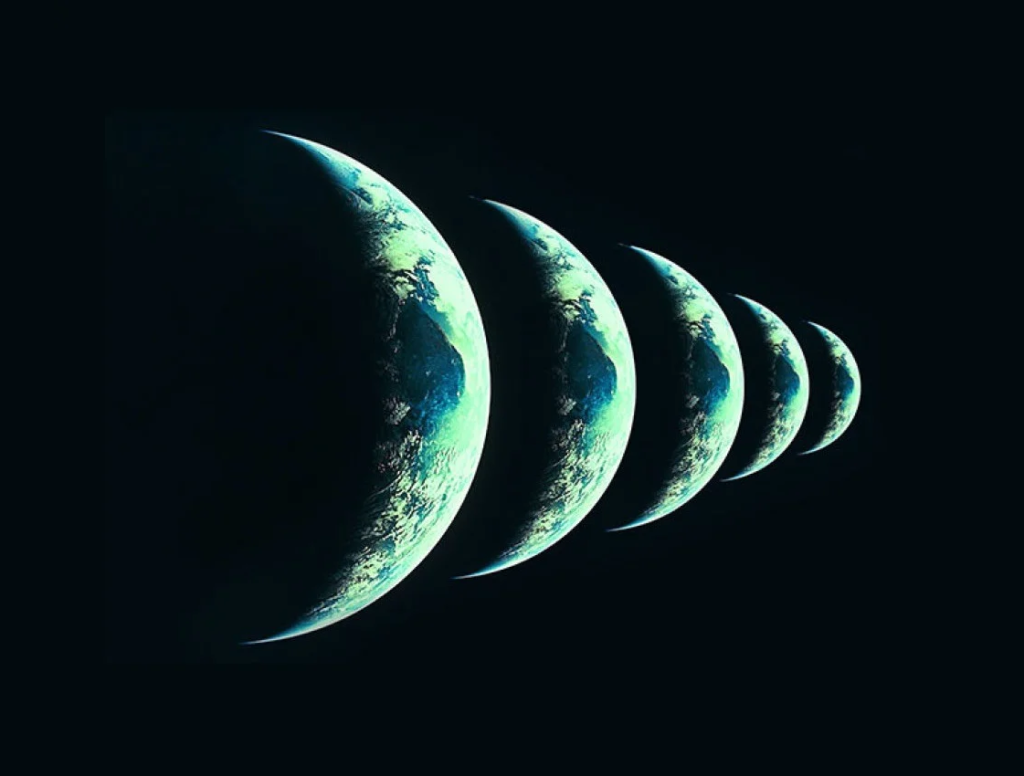
The Parallel Universe/Multiverse Theory Explained 🪞
The history of the multiverse (multiple universes) concept has roots in ancient philosophy and gained traction in modern science through quantum mechanics and cosmology, with key figures like Hugh Everett, Erwin Schrödinger, and Andre Linde contributing to its development.
The theory of parallel universes suggests that our universe is potentially one of infinitely many and that the space and time we can observe is not the only reality. Findings such as the universe being finite have led to this concept. String theory (which proposes that fundamental particles are tiny vibrating strings) is also linked to the multiverse concept.
Scientists suggest that our universe might be just one of many, with different physical laws and constants, arising from various configurations of extra dimensions. Beyond the observable universe, other universes may exist. Multiverses are predicted by several scientific theories that describe different possible scenarios, from regions of space in different planes than our universe, to separate bubble universes that are constantly springing into existence.
The Inflationary Cosmology Theory gains a lot of scientific credibility. It is the idea that as The Big Bang happened, the universe rapidly expanded exponentially. “This theory at first looked like a piece of science fiction, although a very imaginative one,” says Linde, one of the architects of cosmic inflationary theory. “But it explained so many interesting features of our world that people started taking it seriously.”
Inflationary Cosmology predicts that inflation could happen over and over again infinitely, creating a constellation of bubble universes. Those universes would not have all the same properties as our own. Physics may behave differently. Some of them might be very similar to our universe, but they all exist beyond the realm we can directly observe.
Another compelling theory is the Many-Worlds Interpretation (MWI) of quantum mechanics. It is the theory that mathematically describes how matter behaves and was proposed by Physicist Hugh Everett in 1957. It predicts the branching timelines of alternate realities in which our decisions play out differently, producing a wide range of different outcomes, some not so different, others very different.
James Kakalios of the University of Minnesota shares:
“Hugh Everett says that there’s an infinite number of parallel Earths. When you do an experiment, all that proves is that you live on the Earth where that was the outcome of that experiment. However, on other Earths, there’s a different outcome.”
Anything the mind can conceive actually happened in a parallel reality – Billy Carson
>In the Many-Worlds Interpretation, versions of you could be living the many different possible lives you could have led if you’d made different decisions. However, the only reality that’s perceptible to you is the one you inhabit.
“Anything the mind can conceive actually happened in a parallel reality,” Billy Carson.
</aBlack Holes and the Multiverse 🌀
Some theories propose that black holes could act as gateways to other universes or that universes could be born inside of them (leading to a multiverse scenario where our universe is just one of many). This is explained in more details below.
Black Hole Cosmology:
One idea, known as black hole cosmology, suggests that our observable universe might be the interior of a black hole within a larger, parent universe or multiverse.
“Baby Universes”:
Some theories suggest that black holes could contain”‘baby universes” or that our universe could be nested inside a black hole, which is itself part of a larger universe.
Wormholes and Alternate Realities:
The idea that black holes could be doorways into alternate realities is explored through the concept of wormholes, which are hypothetical tunnels through spacetime.
Einstein-Rosen Bridge:
Some theories propose that instead of collapsing into a singularity, the matter within a black hole might create a wormhole, also known as an Einstein-Rosen Bridge, connecting to another universe.
Evidence and Testing:
Some researchers suggest that if our universe was born inside a rotating black hole, it might inherit the parent object’s rotation, which could be tested through future experiments.
Dark Matter Connection:
Some studies suggest that tiny black holes from the early universe could contain “baby universes” and potentially explain the existence of dark matter.
Primordial Black Holes:
The American Physical Society suggests that primordial black holes (PBHs) produced by the nucleation of false vacuum bubbles during inflation could account for all dark matter, explain a candidate event in the Subaru Hyper Suprime-Cam (HSC) data, and contain both heavy black holes and very heavy seeds of supermassive black holes.
HSC Observations:
The Hyper Suprime-Cam (HSC) has a unique capability to image the entire Andromeda galaxy every few minutes. When a black hole passes through the line of sight to one of the stars, the black hole’s gravity bends the light rays and makes the star appear brighter than before for a short period of time.
Stephen Hawking’s Perspective:
Stephen Hawking’s quantum perspective on the cosmos also touched upon the multiverse paradox, suggesting that black holes might be sending information to other universes or even back into our universe in different forms.
Check out our Multiverse Clothing Range:
- Sale!

Multiversal Simulation T-Shirt – Unisex 100% Cotton Holographic Universe Tee (White Text)
Original price was: $39.99.$31.99Current price is: $31.99. Select options This product has multiple variants. The options may be chosen on the product page - Sale!
Multiversal Simulation T-Shirt – Unisex 100% Cotton Holographic Universe Tee (Black Text)
Original price was: $39.99.$31.99Current price is: $31.99. Select options This product has multiple variants. The options may be chosen on the product page - Sale!
Multiversal Simulation Hat – Holographic Universe Cuffed Beanie Unisex (White Text)
Original price was: $32.99.$26.39Current price is: $26.39. Select options This product has multiple variants. The options may be chosen on the product page - Sale!
Multiversal Simulation Hat – Holographic Universe Cuffed Beanie Unisex (Black Text)
Original price was: $32.99.$26.39Current price is: $26.39. Select options This product has multiple variants. The options may be chosen on the product page - Sale!
Multiversal Simulation Trucker Cap – Unisex Holographic Universe Clothes (White Text)
Original price was: $39.99.$31.99Current price is: $31.99. Select options This product has multiple variants. The options may be chosen on the product page - Sale!
Multiversal Simulation Trucker Cap – Unisex Holographic Universe Clothes (Black Text)
Original price was: $39.99.$31.99Current price is: $31.99. Select options This product has multiple variants. The options may be chosen on the product page - Sale!
Multiversal Simulation Snapback Cap – Unisex Holographic Universe Clothes (White Text)
Original price was: $46.99.$37.59Current price is: $37.59. Select options This product has multiple variants. The options may be chosen on the product page - Sale!
Multiversal Simulation Snapback Cap – Unisex Holographic Universe Clothes (Black Text)
Original price was: $46.99.$37.59Current price is: $37.59. Select options This product has multiple variants. The options may be chosen on the product page








The Emergent Multiverse Quantum Theory According to the Everett Interpretation 🌌
The Emergent Multiverse Quantum Theory, based on the Everett Interpretation (also known as the Many-Worlds Interpretation or MWI), proposes that quantum mechanics describes a constantly branching reality where all possible outcomes of quantum measurements are realized in separate, non-communicating branches of the universe.
Key Ideas of the Emergent Multiverse Theory (Based on Everett’s Interpretation)
Wavefunction Reality:
The wavefunction is a real, physical entity that describes the entire universe.
It never collapses (unlike in the Copenhagen interpretation). Instead, it continuously evolves according to the Schrödinger equation.
Branching Universes:
Whenever a quantum measurement occurs, the universe “branches” into multiple copies, each corresponding to a different possible outcome.
All outcomes exist, but in different decoherent branches that cannot interact with each other.
Observers as Part of the Quantum System:
Since measurement is just a physical interaction, the observer also becomes entangled with the quantum system.
This leads to the experience of a definite outcome in each branch, while other versions of the observer exist in other branches.
Emergent Classicality:
The classical world we experience arises emergently from the quantum reality due to decoherence (the process by which quantum states stop interfering and behave classically).
No Need for Wavefunction Collapse:
In contrast to other interpretations, MWI eliminates the need for the mysterious “wavefunction collapse.”
Instead, every possible event continues to exist in separate, non-communicating realities.
The “Emergent” Multiverse:
The many worlds are not fundamental but emerge from the unitary evolution of the universal wavefunction.
This differs from naïve multiverse theories where different universes exist independently; instead, the branching structure emerges naturally from quantum mechanics.
Philosophical and Scientific Implications
Determinism:
The theory is fully deterministic—randomness is an illusion because all outcomes happen.
No “Special” Observers:
There is no need for an external observer to “collapse” the wavefunction.
Testability:
MWI makes the same experimental predictions as standard quantum mechanics, making it hard to distinguish experimentally.
Probability Issue:
Critics argue that if all outcomes occur, it’s unclear how to make sense of quantum probabilities (this is called the “Born rule problem”).
The Emergent Multiverse perspective, developed by theorists like Dr. David Wallace, refines Everett’s idea by emphasizing that the branching structure itself is an emergent feature of unitary quantum mechanics. You can read Dr. David Wallace’s book The Emergent Multiverse Quantum Theory According to the Everett Interpretation here and view his lecture on it in the YouTube video below.
The video explains that quantum mechanics can be understood without wave function collapse, where reality is a single evolving wave function that naturally splits into “branches” (worlds) due to decoherence:
- The universe is described by a single wave function that evolves smoothly according to quantum laws.
- There is no special “collapse” of the wave function when a measurement happens.
- Instead, when quantum systems interact with their environment, they undergo decoherence; different outcomes stop interfering with each other and they become effectively independent “branches”.
- These branches form what we experience as classical reality (one definite outcome per observer).
- The “many worlds” are not separate physical universes added on top; they are emergent patterns within the same wave function, like overlapping histories that stop interacting.
- Each measurement-like event causes the universe to branch into non-communicating outcomes.
- Probability (Born Rule) is explained as the structure/weight of branches within the wave function, not fundamental randomness.
- The classical world we experience is a coarse-grained, stable slice of a deeper quantum reality.
The multiverse is not an extra assumption, it is what you naturally get if quantum mechanics is taken seriously everywhere. What we call “one reality” is actually just the emergent, decohered branch we happen to experience inside a much larger quantum wave function.

Multiverse/Parallel Universe Physicist Videos 🎥
Below are some informative videos from the likes of World Science Festival and Professor Sean Carroll (a physicist that specializes in quantum mechanics, gravitation, cosmology, statistical mechanics, and foundations of physics).
Video 1 – Infinite Worlds: A Journey through Parallel Universes (World Science Festival)
This World Science Festival talk features physicist Professor Brian Greene and others. Their discussion on the nature of the universe and the possibility of multiple universes includes:
- Our Universe Might Not Be Unique – What we call “the universe” might be just one of many universes existing in a larger reality, often called the multiverse. Each of these universes could have different physical properties or laws.
- Cosmic History and The Big Bang – The Big Bang theory describes the origin of our observable universe from a dense, hot state. Modern cosmology has expanded on this to consider what lies beyond our observable cosmos.
- Inflation and the Multiverse – Inflationary cosmology is the idea that the universe underwent an extremely rapid expansion in its earliest moments. This inflation could be eternal in some models, producing a “bubble bath” of universes where each bubble is a separate cosmos with its own characteristics.
In summary, the talk explores how discoveries in cosmology and theoretical physics lead scientists to consider that our universe might be just one among many “parallel” universes, formed through processes like eternal inflation and predicted by certain interpretations of quantum theory. It’s an open, interdisciplinary conversation about pushing the boundaries of how we understand reality.

Videos 2, 3, & 4 – Professor Sean Carrol’s Views on the Multiverse
Professor Sean Carrol’s views on the multiverse include:
- The Many-Worlds Interpretation (MWI) of Quantum Mechanics – According to MWI, every quantum event that can happen does happen, but in different, branching parallel universes. This means there isn’t just one outcome, but a constantly branching multiverse of all possible outcomes.
- The Multiverse as a Natural Consequence of Physics – The multiverse isn’t some speculative add-on, but a natural outcome of quantum mechanics. The wave function of the universe evolves deterministically without collapse, leading to many coexisting realities.
- No Collapse, No Hidden Variables – Prof. Carroll rejects the idea that quantum states “collapse” when measured (which is the standard Copenhagen interpretation). Instead, all outcomes happen in parallel, eliminating the need for hidden variables or special observer roles.
- Multiverse Types Beyond MWI – Prof. Carroll also acknowledges other kinds of multiverse ideas from cosmology like eternal inflation leading to “bubble universes”, but sees the MWI quantum multiverse as more fundamental. The cosmological multiverse is more speculative and separate from the quantum multiverse, but both might be part of a bigger picture.
- Multiverse and Scientific Reality – The multiverse idea is scientific and testable in principle, not just philosophy or science fiction. It’s the simplest explanation for quantum phenomena without adding unnecessary postulates.
- Philosophical Implications – The multiverse challenges classical intuitions about reality, identity, and probability. We should rethink what “reality” means if many versions of ourselves exist simultaneously.
In summary, Professor Sean Carroll believes the multiverse is a real, scientific outcome of quantum mechanics (specifically Many-Worlds), where all possible quantum events happen in branching parallel universes. This view removes the need for wave function collapse or hidden variables, and he treats the multiverse as a natural extension of fundamental physics, not just a wild speculation.


Video 5 – The Many Worlds of the Quantum Multiverse
This video explains the quantum physics idea that reality may exist as multiple possible histories (many worlds), where quantum “superpositions” don’t collapse into one outcome but instead split into different branches of the universe:
- In quantum physics, particles exist in a superposition (multiple possible states at once) until measured.
- The double-slit experiment shows particles behaving like waves of probability, exploring all possible paths.
- The traditional Copenhagen interpretation says measurement causes the wave function to collapse, only one outcome becomes real; this introduces randomness into reality.
- The problem of measurement leads to paradoxes like Schrödinger’s cat, where a system seems both alive and dead until observed.
- Physicist Hugh Everett proposed the Many Worlds Interpretation to resolve paradoxes; the wave function never collapses, instead, reality splits into multiple parallel branches and every possible outcome happens in a different “world”.
- There are countless versions of every event and decision.
- You exist in just one branch among many.
- All branches are equally real.
- Many Worlds is:
- Deterministic (no randomness, just branching cause-and-effect).
- Mathematically consistent with quantum physics
- It raises philosophical questions about free-will, identity (many versions of “you”), and the nature of reality itself.
In summary, quantum mechanics suggests reality may not be a single timeline. Instead, it may be a constantly branching multiverse of parallel worlds, where every possible outcome of every event actually happens somewhere.

You can read more on the multiverse here and the parallel universe here.