
Article Overview 🔎
- Answering Questions on Life After Death
- Lessons from Near Death Experiences
- Do we see Passed Loved Ones Again?
- Non-Human Insights?
Answering Questions on Life After Death 💭
Common life after death questions include, What happens? Where do we go? Do we see loved ones? The videos and video summaries below show the research that different people have done into answering these questions.
This post also links with our Near Death Experiences (NDE) post and past life memories post (especially those from children who had no way of knowing the information provided, which also includes interesting work from some mediums/psychics). Note that NDEs have become more frequent since developments in technology give the ability to revive people from cardiac arrests and other critical conditions. In summary, people share similar experiences. These experiences include leaving the body, but still perceiving everything and going into another reality where you meet passed loved ones, angels, and God.
It is also worth reflecting on the Double Slit Experiment that links to the Holographic Universe theory. This experiment shows that the act of consciousness observing matter affects the way that matter behaves. As such, leading physicists in the World Science Festival, as well as Elon Musk and former NASA physicist Tom Campbell believe that consciousness is the infinite, non-physical source and reality is a simulation.
Staying on the physical side, the 21 Grams Experiment conducted in 1907 by a Dr. Duncan MacDougall is another renowned experiment. Dr. MacDougall, was a physician in Massachusetts, who placed 6 terminally ill patients on specially constructed industrial scales and recorded their weight before and then at the exact moment of death. Results led him to conclude that human body’s lose around 21 grams of weight immediately after death.
Here are some quotes that reflect some of these findings:
“You don’t die, as a consciousness you never die.” Deepak Chopra.
“You can’t divide or multiply consciousness. It’s formless, infinite, spaceless, timeless, irreducible, fundamental, unimaginable, but the source of imagination. It cannot be conceptualized, but is the source of conception. It cannot be perceived, but is the source of perception.” Erwin Rudolf Josef Alexander Schrödinger, one of the pioneers of quantum mechanics.
“The Aboriginals called this reality ‘dream time’, the Native American Hopi tribe called this ‘sleepy time’ and that we have a higher self in a higher realm. The voice we hear in our head is really our higher selves talking to us.” Billy Carson.
“We are asleep. Our Life is a dream. But we wake up sometimes, just enough to know that we are dreaming.” Ludwig Wittgenstein.
“The Sumerian tablets say that on death, we have the choice of going through the tunnel of light (back to source/heaven) or getting off the wheel (reincarnation).” Dr. Richard Alan Miller.
When looking into life after death videos, stories, documentaries and podcasts below, they all tend to have the same message that you are infinite awareness having a human experience; you’re a soul that has embodied your body which filters everything else out so that you only perceive this level of reality for this experience. These include life after death insights from professors, researchers, Dolores Cannon, Peter Fenwick, David Icke, Anita Moorjani, Sadhguru, and Tom Campbell.
Video 1 – Consciousness Beautifully Explained: Swami Sarvapriyananda at IIT Kanpur
In this video Hindu monk Swami Sarvapriyananda explains what consciousness is with practical examples. Here is some of the presentation’s script:
“It is Consciousness, Chaitanyam. The word is Chaitanyam in Sanskrit or Chit. Chaitanyam, Chit, these are the words used and what he says is, there is a consciousness in you. This is Chaitanyam and you have a mind and you have a body.
This consciousness shines in the mind and through that in the body, in all the organs of the body and you feel this consciousness. This is the answer. Now the answer here is, the thing to be noted here is, the teacher presents consciousness in five aspects. Five points you have to understand, appreciate.
First point – Consciousness is not a part of your body or your mind. It is apart from your body and mind. Here it is different from science because modern science would say, consciousness is a product of your body. Even your mind is a product of your body. Mind and consciousness all are products of the brain. That is what physiology would say today, but here the teacher says, consciousness is apart from your mind and body.
Second point – It is apart, but it pervades and illumines the mind and body. Consciousness pervades and illumines the mind and body, enabling it to function.
Third point – This consciousness is not limited by the mind and body. It exists apart from the mind and body also. It is not limited to it. It is not something here in this particular brain, in this part of the body. It is not limited by the body.
Fourth point – This consciousness is known, it is known in the functioning of the mind and body. Through the functioning of the mind and body, we can know consciousness, we can experience consciousness.
Fifth point – Without the mind and body, consciousness is still there, but it cannot be known. It is not experienced. For example, there is light here from these tube lights. Here is my hand and light is being reflected from this hand. The light is not a part of this hand. It is not a product of this hand.
I can experience the light when it is reflected. And the last point, very interesting is, if I remove the hand, the light is still there, but it is not experienced. Now, it is experienced. Now, it is not experienced.”
Video 2 – Science Experiment Proves Afterlife is Real
This video from The Infographics Show explores what happens to consciousness after death, focusing on scientific research rather than religious beliefs. It explains that clinical death occurs when the heart stops, but recent studies suggest the brain may remain active much longer than previously thought, possibly hours or even days.
Researchers like Dr. Sam Parnia propose that consciousness may persist after the body shuts down, though its exact nature and location in the brain remain unknown. Some theories suggest consciousness could exist in individual cells or even as a form of energy.
The video highlights NDEs, where people who were clinically dead report:
- Seeing bright lights,
- Encountering guiding figures.
- Hearing conversations while unconscious.
- Having out-of-body experiences and accurately describing events.
These experiences are reported across cultures and age groups, suggesting a consistent pattern.
The video also notes that death is a gradual process rather than an instant event, meaning consciousness may linger temporarily and, in some cases, people can be revived—effectively experiencing a form of “afterlife.”
Also, many people who undergo near-death experiences report lasting psychological changes, such as increased empathy, reduced fear of death, and a more compassionate outlook on life.

Video 3 – Researchers Say there’s Evidence that Consciousness Continues After Clinical Death
This video also discusses Dr. Sam Parnia and a study they did at NYU Langone, where they examined what happens when people die, particularly during cardiac arrest (when the heart stops). Traditionally, death was defined as the point when the heart stops, breathing ceases, and the brain shuts down. However, modern medicine can sometimes revive people minutes or even longer after this point.
The study analyzed over 2,000 patients across multiple countries who were revived after cardiac arrest. Surprisingly, about 40% reported some level of awareness during the time they were technically dead. Around 10% described deep, meaningful or mystical experiences, and 2% had detailed awareness of events happening around them that could be verified.
Although the brain appears to stop functioning immediately after the heart stops, the researchers suggest that consciousness continues after clinical death. Many people who had these Near Death Experiences reported feelings of peace, seeing bright lights or deceased relatives, and encountering a loving presence. These experiences often led to long-term positive changes, such as reduced fear of death and increased compassion.
Not everyone remembers such experiences, but this may be due to memory loss caused by medical treatments like sedation. Researchers are now investigating whether more people have these experiences than reported, but simply forget them.
Video 4 – Consciousness is Immortal: An In-Depth Interview with Tom Campbell
In this video, physicist Tom Campbell discusses that reality is fundamentally a simulation created by consciousness, not physical matter:
1. Consciousness is fundamental
- Consciousness is the primary “thing” that exists.
- Physical reality (what we see and touch) is secondary, essentially a rendered experience.
2. Reality as a simulation (Simulation Theory/Holographic Universe)
- The universe works like a virtual reality system.
- Our brains don’t create consciousness; instead, they act like interfaces or receivers.
- What we perceive is like a data stream interpreted by our minds.
- The goal of existence is evolution of consciousness.
- To become less fearful, more cooperative, and more empathetic.
4. Free-will matters
- Humans have free-will, which allows meaningful choices.
- Growth comes from making better choices over time.
5. Physics and science fit in
- Modern physics (especially quantum mechanics) is seen as consistent with a simulation-like reality.
- Physical laws are like rules of the simulation, not ultimate truth.
6. Paranormal/non-physical experiences
- Things like intuition, out-of-body experiences (OBEs), or psi phenomena are explained as access to other “data streams” beyond physical reality.
In summary, Tom Campbell says reality isn’t a physical universe with consciousness inside it. It’s a consciousness system generating a virtual universe.

Video 5 – Is There Life After Death? Moderated by John Cleese (2018 Tom Tom Festival)
This video is a panel discussion featuring scientists, researchers, and thinkers exploring whether consciousness can exist beyond the brain. In other words, whether there might be life after death. Some of the main points include:
- Consciousness – Human consciousness exists independently of the brain.
- Near Death Experiences – People report vivid, structured experiences (e.g. seeing doctors, hearing conversations) while clinically unconscious.
- Veridical perception cases – Some patients recall accurate details of events that occurred while they were supposedly brain-inactive.
- Children with past-life memories – Cases where children recall specific details about previous lives that can sometimes be verified.

Video 6 – What Really Happens when you Die/End-of-Life-Phenomena: At Home with Peter Fenwick
This video features Peter Fenwick, who studies what people experience as they approach death. His key message is that dying is often a structured, meaningful, and sometimes peaceful process, not just a sudden shutdown. Some of the main talking points include:
1. Dying is a process, not a single moment
- Death unfolds in stages over time.
- Many people go through recognizable psychological and physical changes before dying.
2. “End-of-life phenomena” are common
Fenwick describes recurring experiences reported by patients, families, and hospice workers:
- Seeing deceased relatives or figures.
- Feeling they are being “guided” somewhere.
- Talking about “going home” or preparing for a journey.
These are often calm and comforting, not frightening.
3. Terminal lucidity (the “rally”)
- Some people suddenly become clear, alert, or energetic shortly before death, even after long illness.
- This can be surprising, but is widely observed.
4. Near Death Experiences (NDEs)
People who nearly die often report:
- Leaving their body.
- Moving through darkness or a tunnel.
- Encountering light or beings.
These experiences feel very real and transformative.
5. The dying process is often peaceful
Contrary to common fear, many deaths are described as:
- Calm
- Meaningful
- Accompanied by a sense of acceptance or transition
Fenwick says we should treat dying as an important human experience, not a medical failure.
6. Science vs interpretation
Some scientists explain these experiences as brain effects (e.g. lack of oxygen, hallucinations).
Fenwick suggests they may point to something deeper about consciousness.
In summary, Peter Fenwick’s studies show that dying is not just biological shutdown, it’s often a predictable, meaningful transition with shared human experiences.

Video 7 – Dolores Cannon on Life After Death – 2008 – DC Lecture
In this video, hypnotherapist Dolores Cannon presents a spiritual framework about life after death, reincarnation, and the purpose of human life, based on their experiences with past-life regression hypnosis. They claim consistent patterns from many subjects and interpret these as insights into what happens after death:
1. Death Experience
- Death is described as quick and painless; the person leaves the body and observes it from outside.
- People reportedly feel relief and freedom, not fear.
- They are not alone; they are met by guides, “guardian angels,” or deceased loved ones.
2. Afterlife Journey
- A bright light is described as a powerful energy source (sometimes equated with God).
- In actual death (not near death), the soul passes through this light and cannot return.
- The body dies once the “life force” (or “silver cord”) is severed.
3. No Hell, Only Learning
- Hell does not exist; it’s described as a human or religious invention.
- Life on Earth is a school for learning lessons, especially about emotions and limitations.
- Mistakes are part of learning, and people may reincarnate to try again.
4. Three “Levels” of the Afterlife
- Lower astral – Confused or negative souls who don’t realize they’ve died (eventually guided onward).
- Middle astral – A pleasant “heaven-like” place shaped by personal expectations (temporary).
- Upper astral: A more advanced realm focused on knowledge, healing, and spiritual growth.
5. Life Review
- After death, individuals undergo a life review, reliving their actions from others’ perspectives.
- This leads to understanding harm caused and motivates karma repayment.
6. Reincarnation & Planning Life
- Souls allegedly plan their lives before birth, including relationships, challenges, and even how they will die (an “exit plan”).
- Life is described as a “play” or “role”, and the body is just a temporary “costume”.
7. Purpose of Returning to Earth
- Earth provides hands-on experience, which is more effective for learning than the spiritual realm.
- People return to learn lessons faster, resolve karma, and grow spiritually.
8. Forgetting the Plan
- Upon birth, people forget their soul plan (to preserve free will and make life a genuine test).
- Early childhood and sleep are described as times of partial connection to the spiritual realm.
9. Suffering & Difficult Lives
- Hard lives, illness, or disability are framed as opportunities for learning or karma resolution and ways to teach others compassion.
10. Death & Grief Perspective
- Death is portrayed as returning “home” to a peaceful state.
- Grief is acknowledged, but the speaker suggests loved ones leave when their “mission” is complete.
- Letting go is encouraged rather than holding on.
In summary, Dolores Canon’s career as a past-life regression hypnotist suggests that:
- Life is a planned learning experience.
- Death is not something to fear.
- Humans are spiritual beings having temporary physical experiences.
- Growth happens through repeated lifetimes and self-reflection.

Video 8 – Life after Death: David Icke talks to Alan Pemberton
In this video David Icke talks about consciousness, reality, and life after death. Icke discusses that everything in existence is fundamentally one unified “energy” or consciousness. According to this view, individual beings are like small parts of a single vast universal mind, similar to droplets in an ocean. What we perceive as separate individuals is only a limited perspective within that larger whole.
He uses the analogy of radio frequencies to explain reality. Just as many radio stations exist in the same physical space, but are tuned to different frequencies, different “levels of consciousness” are said to coexist in the same reality without perceiving each other. Human life is described as being “tuned” to one specific frequency, which creates our everyday physical experience.
Death is not an end but a transition. Consciousness is said to leave the physical body and move to another “frequency” or level of existence, continuing its evolution. Near Death Experiences are presented as supporting evidence, interpreted as consciousness temporarily separating from the body and observing it from outside.
Existence is an ongoing journey of learning and evolution through experience. Even painful or negative life events are framed as contributing to growth over time. Life is portrayed as an endless process of development rather than a single lifetime. God is not a separate external being, but the totality of consciousness itself, present in everything, expressed through all forms of life and matter.
Finally, he suggests that if scientific acceptance of life after death grows, reactions will vary. Some people will feel comfort and joy, while others tied to rigid belief systems may experience emotional distress. Overall, the message is optimistic, emphasizing unity, continuity of existence, and that we do not die, but continue evolving.

Here are some more videos with insights into life after death:


Lessons from Near Death Experiences 🧠
NDEs have become more frequent since developments in technology have given the ability to revive people from cardiac arrests and other critical conditions. In summary, people share similar experiences. These include:
- Experiencing “bed visits” by passed loved ones when ill in hospital.
- Floating out of the body in an Out-Of-Body Experience (OBE).
- Whilst in an OBE, recalling details that happened in the hospital (the same room and other rooms) when they were meant to be dead.
- Still feeling like themselves (same awareness, memories, and personality/they did not dissolve into infinite consciousness), but experienced reality free from the filters of the brain and body.
- Seeing a bright white light/a tunnel of light/a tunnel with light at the end.
- Flying through space past stars and orbs.
- Being with others that died at the same time of the incident that caused the NDE.
- Having a life review, but they are the only judge of their life (not a judgmental figure or God) and experience how they made others feel, sometimes said to be learning with compassion.
- Being greeted with great love and excitement from passed loved ones (that look in their prime, often in their 30’s), the same way we are when we are born into this world, in a “heavenly realm” that looks similar to Earth, but more vivid (e.g. a wider spectrum/shades of colours) and no physical restrictions (e.g. nothing ages or dies, things that can’t be done here can be done there etc.).
- Being reunited with pets.
- Meeting people that they have never seen before, but seeing them in family photos later in life, after the NDE.
- Seeing people that they thought were still alive, but finding out after NDE that they were dead.
- Being given messages to say to loved ones. A great example of this is an NDE where someone was told to tell another person who was still alive “sorry for ruining the car”, which she knew nothing about, but the other person knew exactly what was meant by this and the person in the NDE did ruin the car in a crash that killed them.
- Feeling a profound sense of peace and unconditional, infinite love.
- Feeling connected to all and everyone, including God.
- Learning that signs from god/the universe/spirit guides are the first initial intuitive thought/gut feeling, anything after that is your brain overthinking.
- Remembering pre-birth experiences of choosing this life (from choosing this planet, to your parents, to how you will look, to how bright you will be) for the experiences that would be gained, tailored to your soul’s growth/their soul’s current level of development/maturity (e.g. some may be better off not living as an extremely bright person as that would bring extreme arrogance, or not too good looking as they would be too easily distracted by the attention of others which doesn’t tick what they need).
- A knowing that life is to be lived to gain experiences, fulfil purpose, and to be enjoyed (some have explained this as “we are manifesting god wanting to play”).
- Life is a “training ground for the soul” where free-will and the “veil” that makes us forget pre-life allow for genuine growth).
- Learning valuable lessons to give meaning, purpose, and to live life to the full.
- Learning we should choose to be loving (godly) even in challenging times.
- Learning that the meaning of life/our life purpose is to grow as a soul and become more godly; build positive traits love, kindness, compassion, forgiveness, integrity, and service to others are essential for spiritual growth and lead to greater happiness beyond this life/ascend to higher realms.
Many believe NDEs are direct proof and evidence of the afterlife. Here’s a top comment from the TED Talks video in the previous section, summarizing the ‘5 Life Lessons’:
Do we see Passed Loved Ones again? 😇
Here’s a quote regarding the question, ‘Do we see loved ones again?’:
‘Imagine you’re in primary school and you have a friend who is a couple of years older that’s leaving to go to secondary school. You’ll miss them for the years that they’re gone, but know you’ll be with them again in the future.’
Also, Bill Letson‘s NDE video below touches on this and has accumulated a high number of views. He mentions a number of things including, “Flying through space past orbs, feeling everything a human wants to feel, with no negative feelings such as anger, like a cosmic orgasm!”. Also, feeling back where he belonged and that, “All passed loved ones are fine, they are just a bit further down the path than you in the afterlife dimension.” He also discusses life purpose, saying that we are all here for a reason; to live life to the fullest and learn/grow as a soul. He says, “Make those on the other side proud of what you do here.”

Video 9 – David Icke’s Mind-Blowing Explanation For The Bright Light After Death
An interesting counter-take on the visuals seen in NDEs is shared by David Icke. He says that the initial afterlife visions perceived could still be part of this same simulation we experience in life and that we are being manipulated to go to “the light” to encourage reincarnation, but we should ascend this reality to a higher dimension. He also believes that any loved ones that we initially perceive are just projections taken from the Akashic Records (a record stored in another dimension of all human events, thoughts, words, emotions, and intent ever to have occurred) to encourage us to go towards the light and reincarnation. He doesn’t say that loved ones aren’t waiting for us, but that initial visuals could be manipulations and not true. He touches on this in the 10th video below.
Icke also acknowledges common themes from accounts of Near Death Experiences such as feeling great for leaving the body and reviewing your own life rather than being judged by a God. He then connects this with accounts of those that remember pre-birth experiences. This includes planning your life in detail such as choosing certain personality traits, which he believes can overpower your soul’s personality when incarnated into a human body (so you can have that experience). In knowledge of this, Icke questions karma for actions, as your body has been programmed to act that way and life is planned to some extent. In turn, he sees going back to correct karma as a fake idea and reincarnation trap. Caveats argued include that there is still some level of free-will which is a common theme in lessons from NDEs and alleged extraterrestrial encounters.
Icke links some of these ideas with Native American beliefs to not walk straight into the “dazzling bright light”, but to orientate yourself and wait for the right, “warmer light”. Across several Native American traditions, the general theme is, “The soul must not rush toward the first bright phenomenon it sees.” The first “light” may represent confusion, the shock of leaving the body, trickster forces, the land of the dead who are not at peace, the realm of ghosts, or simply the initial disorientation of the spirit leaving the physical world. Instead, the newly departed must wait for true guides (ancestors, spirits, helpers), orient toward the correct direction or trail, choose the proper kind of light (gentle, warm, ancestral) over a blinding or chaotic one. This is conceptually very close to Tibetan, Egyptian, and even some Gnostic afterlife teachings about deceptive or confusing lights. Also, in the Buddhist Saṃsāra reincarnation wheel, it is said one has to “be enlightened” to detach from it.
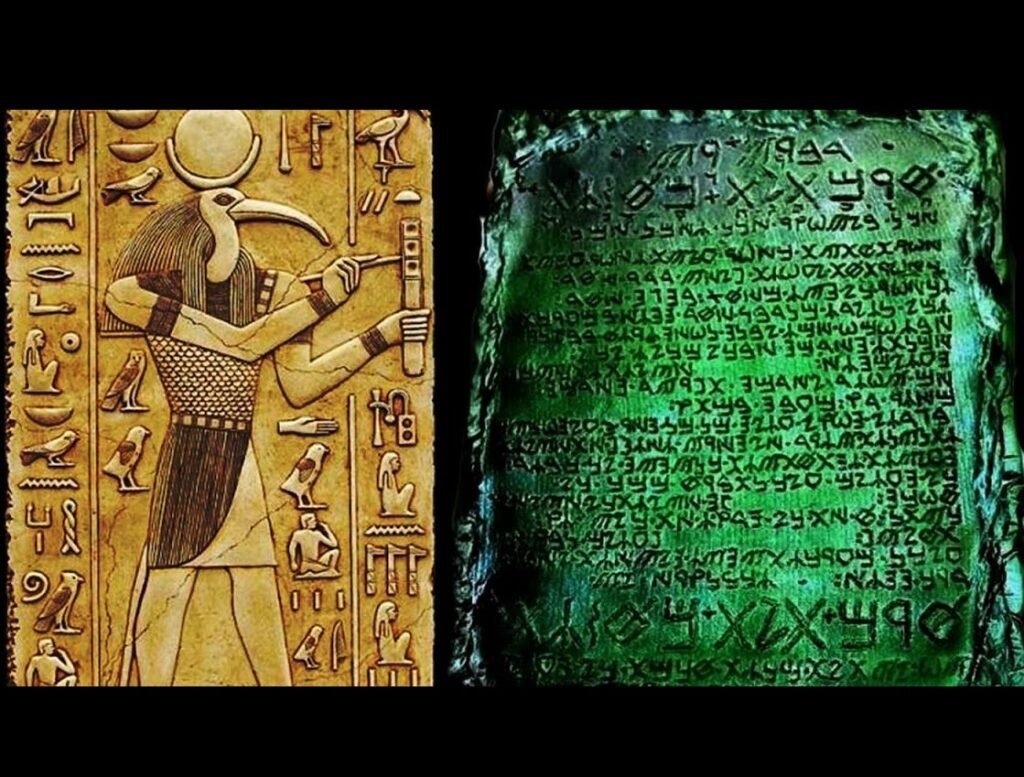
In addition, in the Emerald Tablets, Thoth describes that in the regions reached after death, there exist “shadows” or “dark brothers” who travel only in straight, linear paths. He warns that these beings seek to bind or trap the unprepared soul (this potentially links to Icke’s findings to not walk towards the initial bright light observed after death, as he believes it is a reincarnation trap). Thoth then instructs that by moving in a curved or circular path, one can break free of their line of influence, since the dark beings cannot follow motion that is not straight. He adds that curved motion aligns with the geometry of higher realms, while straight-line movement is characteristic of lower astral entities.
Another theory that links to this is that of John Lear. He suggests that when your soul leaves the body there’s a structure on the moon that sends your soul back to earth to be reincarnated like a reincarnation trap, rather than choosing to reincarnate for more soul growth and life experiences. This links with Icke’s beliefs that the moon and Saturn (Saturn/satellite) influences and generates reality.
Allegedly, some people in secret societies torture each other to point of death through things like freezing the body to induce Near Death Experiences and gain more knowledge of reality, before bringing them back to life.

Non-Human Insights? 👽
The video below shares an alleged encounter with a non-human intelligence that was being observed in a controlled setting in a military base. This anonymous record (perhaps to safeguard themselves from breaches of secrecy) unearthed deep information that resonates with many. Described as a non-hostile being that was questioned about death and it explained what happens and why humanity exists as it does. According to the entity, humans are not accidental; consciousness is not produced by the brain, but temporarily interfaced with it and the brain shapes/decodes this reality (our 5 senses; what we see, hear, smell, taste, and feel), filters perception and limits access, but it does not generate the self.
Death is not annihilation, but a disengagement, after which identity, memory, and selfhood do not dissolve, but continue with greater clarity. It emphasises death as continuity over change.
“What falls away are the distortions imposed by physical survival, fear, impulse, and limitation. When the body can no longer sustain the interface, consciousness withdraws. Withdrawal is not violent or disorienting, it’s a transition. It follows a structure as predictable as birth, though far less understood. It’s something that’s observed repeatedly across different species and worlds, as a consistent pattern rather than a mystery.”
After death, this consciousness clarity is what humans experience as judgment. It explained that there is no external judgment, no “being” weighing actions on a scale. Instead, judgment is immediate recognition through clarity. Consciousness fully recognizes itself, confronting its own intentions and moral choices without distortion. What religions call heaven and hell are not places/geographic locations, but states of alignment or misalignment with truth and selflessness. Suffering or peace arise naturally from what consciousness has become, not from imposed punishment or reward.
“Identity remains intact. Memory persists. The sense of self does not dissolve into nothingness. What falls away are the distortions imposed by physical survival, fear, impulse, and limitation. Consciousness becomes clearer, not altered. This clarity is what humans experience as judgment, though not in the way it is often taught. There is no external tribunal, no “being” weighing actions on a scale. Instead, judgment is immediate self-recognition. Every intention, every choice, every moral compromise becomes visible without distortion.”
“There is no escape from this awareness. Not because it is enforced, but because it is complete. The separation of soul and body occurs. Moral accountability remains. The self continues. What differs is the mechanism. Judgment is not arbitrary and it is not punitive in intent. It is revelatory. Consciousness does not suffer because it is sentenced to suffering. It suffers when it recognizes its own misalignment. This recognition is not cruel. It is necessary. Without it, growth would be impossible. This is why moral choice matters so deeply during physical life.”
“Alignment with truth, selflessness, and what humans often call God produces expansion, connection, and peace. Misalignment produces isolation, contraction, and separation. These are not emotions that pass. They are environments created by the nature of consciousness itself. Heaven and hell are not rewards or punishments imposed from outside. They are outcomes that arise naturally from what consciousness has become. No soul is forced into torment for the sake of balance. Suffering emerges from resistance to alignment just as peace emerges from acceptance of it.”
Choosing more moral choices may make the soul lighter, enabling it to ascend to higher realms after death and it shows spiritual maturity, potentially allowing for further progression in the afterlife. However, these choices should be genuinely positive, made from a feeling of love in the present moment, not fear of consequence, as this is the true intention shaping the free-will of the individual. All thoughts and feelings are accessible from the other side (outside of this dimension) and recorded in the Akashic Records.
It continued communicating that uncertainty during life is intentional. Humans forget pre-birth and post-death knowledge so moral choice remains meaningful (although some children remember pre-birth experiences and past lives, which again Dolores Canon also discovered through hypnotherapy which included soul contracts, plans for life, choosing family, and life experiences, more of which can be read in this post). Faith, doubt, courage, and sacrifice only matter under uncertainty; certainty would reduce life to calculation.
Scripture is described as symbolic guidance rather than literal instruction, meant to orient individuals morally rather than provide technical truth. God is not denied, but spoken about seriously (not distantly) and understood as alignment with the fundamental structure of consciousness. The entity did not validate atheism, nor did it elevate belief systems above one another.
“The core truths contained within scripture are preserved though imperfectly expressed. Human language, culture, and history shaped how those truths were recorded and interpretation introduced division where guidance was intended. The message was never meant to serve institutions more than individuals. The purpose of scripture was not control, but orientation, not dominance but direction.”
“Humans often confuse the message of God with the structure built around it. Institutions evolve, interpretations fracture, but the central call toward humility, responsibility, love, and moral accountability remains intact. Truth does not belong to institutions. It belongs to alignment and alignment is revealed through action, not labels.”
The entity also shared that humanity is observed by other intelligences not for technology or intelligence, but for its rare capacity to choose good under pressure, fear, and limited knowledge. Intervention is avoided because it would invalidate genuine choice. However, it warned that humanity is approaching a moral threshold: power is growing faster than wisdom. Observation is temporary and when moral choice is compromised, observation may shift to participation, though what that entails is left unexplained (this links to UFO sightings often recorded around nuclear installations).
From this, it appears the meaning of life is to grow as a soul and become more godly/build more positive traits (like being caring, wanting to help others, forgiveness etc.). Then, we can ascend to higher realms after death and have a more heavenly experience on Earth. Before having these soul growth experiences, we are not ready to access higher realms and may reincarnate to gain more life experience until we eventually are ready. Life also provides us with great experiences and we should have fun enjoying our own unique expression (hobbies, talents, passions etc.), but soul growth is the key objective communicated.
Reincarnation is also a prominent theme in ancient civilizations such as in Ancient Egypt (links with mummification and ascending to Sirius), in religions like Buddhism, and secret societies like the freemasons (who also allegedly have beliefs of ascending to Sirius).
You can read more posts on life after death here, Near Death Experiences here, and past life memories and mediums/psychics here.